

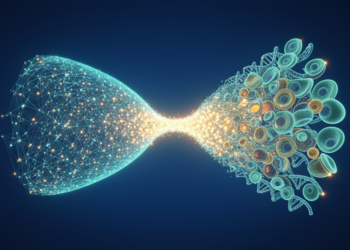
Variational Autoencoders for Biomedical Data: New Study Maps Their Inner Workings
A new study explains how variational autoencoders integrate multimodal biomedical data and reveals key limitations of in silico perturbation analyses.
A new study explains how variational autoencoders integrate multimodal biomedical data and reveals key limitations of in silico perturbation analyses.
A multi-omics Mendelian randomization study identifies HKDC1 and ITGAM as suggestive glycolytic candidates genetically associated with insulin resistance in metabolically ...
A new protocol describes the TIME Study, which will intensively track molecular, physiological, and digital health data in up to ...
A multi-omics study identifies the epigenetic regulator HAT1 as upregulated in glioblastoma, where its inhibition slows tumor growth and boosts ...
A multi-omics study of Simmental cattle links heat stress to vaginal microbial changes, elevated serum serotonin, and reduced reproductive hormone ...
A multi-omics study of 219 Hebao red carp links specific gut bacterial genera, notably Curtobacterium and Kaistia, to muscle fatty ...
A wide-ranging review links genetic variation, multi-omics mechanisms and environmental exposures in idiopathic pulmonary fibrosis, proposing a multi-gene risk score ...
Single-cell and multi-omics analyses of hepatocellular carcinoma point to IL-1β-positive macrophages and IL-1R1-positive inflammatory fibroblasts as putative drivers of a ...
A multi-omics study in GC-1 spermatogonial cells links PFOA exposure to altered autophagy, ER stress signaling and oxidative imbalance, with ...

A new commentary argues that sepsis bundles should serve as a standardized safety floor for time-critical care, with treatment afterward ...


Embark on a thrilling journey of discovery with Scienmag.com—your ultimate source for cutting-edge breakthroughs. Immerse yourself in a world where curiosity knows no limits and tomorrow’s possibilities become today’s reality!