

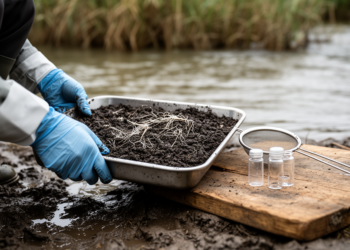
Human DNA in River Sediment Emerges as Strongest Clue to Microplastic Hotspots
A study of China's Shihe River found that human mitochondrial DNA in sediment, a molecular marker of site-specific human activity, ...
A study of China's Shihe River found that human mitochondrial DNA in sediment, a molecular marker of site-specific human activity, ...
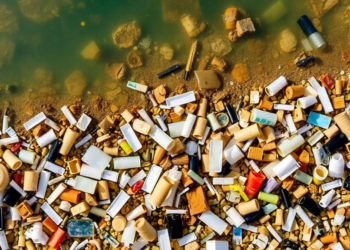
A year-long survey of Bulgaria's Black Sea coast found microplastics in 22 of 23 seawater samples, averaging 7.3 particles per ...
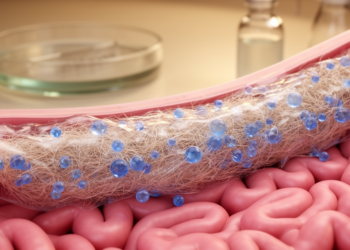
A new Nature Communications study shows that high fiber diets reduce nanoplastic retention in male mice by up to seven-fold, ...

A controlled thin-film experiment shows that TiO2/Fe3O4 composites drive UV-driven oxidation of polystyrene microplastics primarily at the particle surface, leaving ...
The significance of this study becomes clearer when viewed against the broader architecture of PFAS remediation, which increasingly relies on ...

A PRISMA-guided review of fifteen studies finds microplastics throughout the Karnaphuli River system, but warns that source attribution and human ...

A comprehensive review reveals that agricultural soils accumulate far more microplastic pollution than oceans, threatening soil health, crop yields, and ...

A systematic review of 146 studies reveals how plastic debris and invasive species reinforce one another, with consequences for dispersal, ...
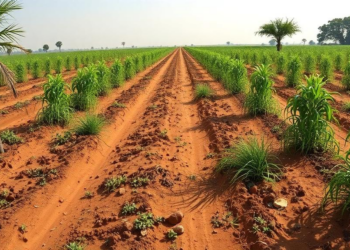
A new review argues that drought reorganizes the bioavailability and mixture behavior of soil contaminants while expanding antibiotic resistance, turning ...
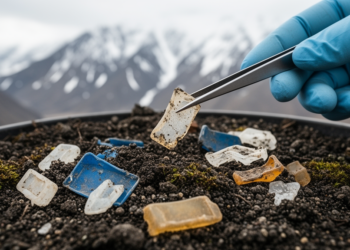
A new study of soil from India's Sukhna Lake watershed shows that environmentally weathered microplastics are oxidized, mineral-coated, and contaminated ...


Embark on a thrilling journey of discovery with Scienmag.com—your ultimate source for cutting-edge breakthroughs. Immerse yourself in a world where curiosity knows no limits and tomorrow’s possibilities become today’s reality!