

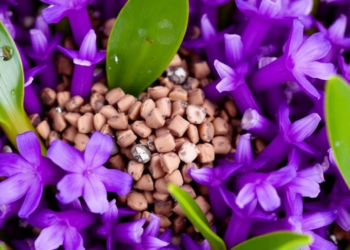
Invasive Water Hyacinth Transformed Into Pellets That Scrub Dye From Wastewater
Thai researchers have turned invasive water hyacinth into pelletized diatomite-based geopolymer adsorbents that remove up to 77 percent of methylene ...
Thai researchers have turned invasive water hyacinth into pelletized diatomite-based geopolymer adsorbents that remove up to 77 percent of methylene ...
Researchers in Thailand transformed rice husk ash and diatomite into reusable porous ceramic granules that remove up to 97.7% of ...
A hydrothermally synthesized ZnO-NiO-WO3-g-C3N4 nanocomposite degrades dye pollutants under visible light while electrochemically detecting vitamin B6 with high sensitivity.
Researchers show that activating the copper MOF HKUST-1 and converting it into copper oxide yields sunlight-driven catalysts that destroy methylene ...
Researchers in India have created a pH-responsive hydrogel from pullulan, carboxymethyl cellulose, and montmorillonite clay that removes over 96 percent ...
Researchers have grafted g-C3N4, CeO2, and ZnO onto PVDF/TiO2 nanohybrid membranes, finding that a graphitic carbon nitride variant removes nearly ...
Researchers have synthesized a zinc oxide-graphene oxide nanocomposite that removes up to 97 percent of methylene blue and 94 percent ...

A ternary photocatalytic composite of praseodymium oxide, neodymium oxide, and graphene oxide degraded 92.3 percent of methylene blue dye in ...
Chemists at Annamalai University showed that changing the organic group on lead(II) dithiocarbamate precursors tunes the morphology, optical properties and ...
Researchers converted coal gangue waste into a molecular sieve that boosts cobalt oxide catalysts for rapid, recyclable degradation of organic ...


Embark on a thrilling journey of discovery with Scienmag.com—your ultimate source for cutting-edge breakthroughs. Immerse yourself in a world where curiosity knows no limits and tomorrow’s possibilities become today’s reality!