

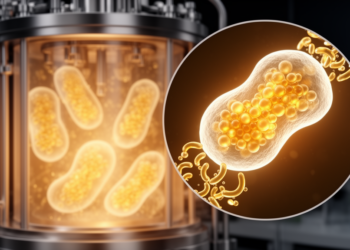
Engineered Microbes Move Closer to Replacing Plant Oils as the Source of a Valued Anti-Inflammatory Fatty Acid
A new review maps how engineered fungi, yeasts, and microalgae could displace plant seed oils as the dominant source of ...
A new review maps how engineered fungi, yeasts, and microalgae could displace plant seed oils as the dominant source of ...

A new review examines how Streptomyces bacteria could produce polyhydroxyalkanoate bioplastics, highlighting omics insights, bioprocess optimization and the barriers still ...

University of Illinois researchers say precision fermentation, long used for fuel and animal feed, could help address global food insecurity ...

A new computational framework called TRAEV predicts whether engineered metabolic traits in microbial strains will persist under adaptive evolution in ...

A new review of more than a hundred marine fungal bioactive compounds finds that only about 10 to 20 have ...

Overexpressing the VTE3 gene in tomato increased α-tocopherol accumulation in fruit and reduced reactive oxygen species under abiotic stress, a ...
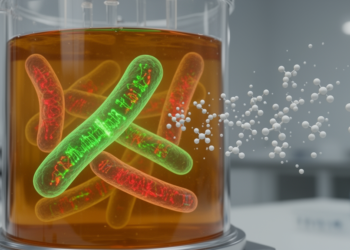
Researchers at Shandong University built a three-module self-induced gene circuit from quorum sensing and stationary phase signals that raised 3-hydroxypropionic ...
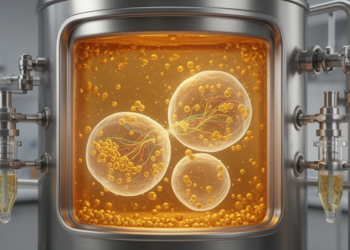
A 2026 review synthesizes plant, enzyme-engineering and microbial approaches to phytosterol production, including a reported engineered-yeast campesterol titer of 5.88 ...
A transcriptomics-guided study reveals how CO2 availability shapes acetate and ethanol production in the acetogenic bacterium Clostridium aceticum, identifying serine ...
Transcriptomics, molecular docking and metabolic modelling identify YALI0_F02013g and YALI0_A19910g as NADPH-dependent oxidoreductases that compete with erythritol synthesis in Yarrowia ...


Embark on a thrilling journey of discovery with Scienmag.com—your ultimate source for cutting-edge breakthroughs. Immerse yourself in a world where curiosity knows no limits and tomorrow’s possibilities become today’s reality!