

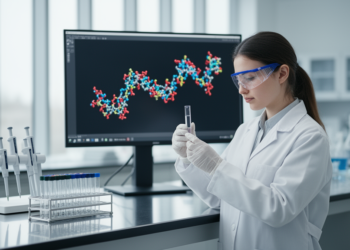
Google.org backs University of Toronto team with $2.3 million to build OpenPep, an AI engine for peptide drug discovery
A University of Toronto-led team will use a $2.3 million Google.org award to build OpenPep, an open-access database and AI ...
A University of Toronto-led team will use a $2.3 million Google.org award to build OpenPep, an open-access database and AI ...

A nationwide external quality assessment exercise reveals that UK laboratories disagree on diagnosing adrenal insufficiency from the same cortisol samples, ...
Researchers have unveiled MassNet, a corpus of 1.5 billion mass spectra across 35 species, and a new transformer model that ...
Physicians warn that decades-old immunoassay-based urine drug tests routinely produce false results that mislead clinicians and harm patients, calling for ...
New research shows that two widely used dairy phosphate salts steer the Maillard browning of casein in opposite directions, with ...
A detailed map of proteins on the surface of high-grade serous ovarian cancer cells has revealed that these tumors depend ...
A new modular reactivity-encoding platform sorts metabolites by functional group before mass spectrometry, boosting detection limits by up to 40,000-fold ...
A reciprocal transplant experiment in the Florida Keys reveals that the environment, not cryptic genetic lineage, is the strongest driver ...
Peptide analysis of tooth enamel from 77 Bronze Age children in northern Serbia reveals that boys and girls were buried ...
A label-free salivary proteomics study identifies increased IgG Fc-binding protein and decreased haptoglobin, prolactin-inducible protein, submandibular gland androgen-regulated protein 3, ...

Embark on a thrilling journey of discovery with Scienmag.com—your ultimate source for cutting-edge breakthroughs. Immerse yourself in a world where curiosity knows no limits and tomorrow’s possibilities become today’s reality!