


Study Links Oxidative Stress Genes to Disc Degeneration
A study published in Frontiers in Cell and Developmental Biology identifies CD36, SESN3, and HMOX1 as key oxidative stress-associated biomarkers ...
A study published in Frontiers in Cell and Developmental Biology identifies CD36, SESN3, and HMOX1 as key oxidative stress-associated biomarkers ...

An injectable hydrogel carrying lab-grown cartilage microtissues preserved disc height and shifted anabolic and catabolic gene expression toward regeneration in ...
A new review maps how metabolite-driven protein modifications such as lactylation, O-GlcNAcylation and succinylation may link the disc's harsh metabolic ...
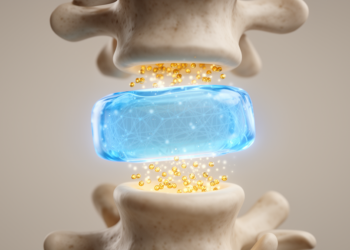
A pH- and ROS-responsive hydrogel carrying CRISPR-Cas9 silenced the TRPV4 calcium channel in rat discs, restoring autophagic flux and slowing ...
A computational study identifies hub genes and signaling pathways that may connect the tire-derived pollutant 6PPD-quinone to intervertebral disc degeneration.
A 2026 perspective synthesizes human, animal and molecular evidence linking cellular senescence, oxidative stress, mechanical loading and microbiome changes to ...
A local genetic screen linked MST1, DLK1, ITIH1 and SAA1 to intervertebral disc-disorder outcomes, while single-cell tissue analysis and a ...
A new study shows that the chromatin protein CBX3 accelerates disc degeneration by silencing the SESN2 gene through H3K9me3 marks, ...
A new study shows that the rare sugar D-allose restores mitophagy, suppresses cGAS–STING signalling and preserves the cytoprotective peptide ADM2 ...
New research in mice shows that age-related loss of Wnt signaling in intervertebral disc cells suppresses chemokine production and blunts ...


Embark on a thrilling journey of discovery with Scienmag.com—your ultimate source for cutting-edge breakthroughs. Immerse yourself in a world where curiosity knows no limits and tomorrow’s possibilities become today’s reality!