


Automotive Honda Fuel Cell Module Reaches 97 Percent Stationary Cogeneration Efficiency
Researchers demonstrated that an unmodified 78-kilowatt automotive Honda fuel cell module achieves up to 97.1 percent total efficiency in stationary ...
Researchers demonstrated that an unmodified 78-kilowatt automotive Honda fuel cell module achieves up to 97.1 percent total efficiency in stationary ...

A study in Next Energy shows that varying levels of airborne sodium from sea salt cause hydrogen flames to shift ...

Researchers have developed an integrated catalytic approach to transform blast furnace gas into high-value methanol, utilizing core-shell materials for improved ...

The 2026 International Engineering Symposium on Energy Frontiers will be held in Hong Kong from December 10 to 12, 2026, ...

University of Sydney researchers have directly observed hydrogen dissolved between metal atoms in alloys for the first time, using cryogenic ...
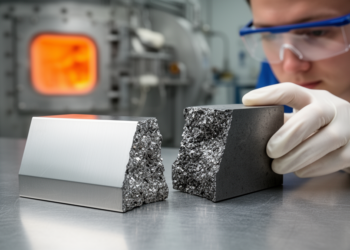
Laboratory tests show SS310 and IN625 remain largely resilient at 450 °C but suffer sharp toughness losses at 900 °C ...

Researchers combined tapered main channels with wavy sub-channels in a PEM fuel cell and used a physics-informed surrogate model with ...

A new physics-embedded machine learning framework called SPEL-VFL reconstructs hidden hydrogen energy flows in smart grids and pipeline networks even ...

Researchers have built a microgrid scheduling system that pairs online electric vehicle battery state estimation with a neural network surrogate, ...

A substrate-activated autocatalytic strategy grows a nano-structured titanium oxide/carbon hybrid layer directly on titanium bipolar plates, delivering record corrosion resistance ...


Embark on a thrilling journey of discovery with Scienmag.com—your ultimate source for cutting-edge breakthroughs. Immerse yourself in a world where curiosity knows no limits and tomorrow’s possibilities become today’s reality!