


Ensemble Algorithms Improve Detection of When Children Stop Wearing Accelerometers
Unsupervised ensemble methods combining Choi, NHANES and HMM classifiers detected accelerometer non-wear in children more stably than individual algorithms.
Unsupervised ensemble methods combining Choi, NHANES and HMM classifiers detected accelerometer non-wear in children more stably than individual algorithms.

A leakage-controlled machine learning pipeline converts routine online gambling telemetry into an auditable three-level risk flag that outperformed incumbent queues ...

A Dutch study of 10,364 vocational graduates links education-job mismatches at labour-market entry to five-year career trajectories, with dual mismatches ...

A year-long cohort study at a Chinese boarding martial arts school found meningococcal carriage prevalence climbing from 30 to nearly ...

A GPS-tracking-based species distribution model shows that Leach's storm-petrels from the threatened Atlantic population concentrate in deepwater areas off Newfoundland ...

Researchers report continuous mass photometry, a technique that tethers individual biomolecules to supported lipid bilayers and tracks their mass changes ...
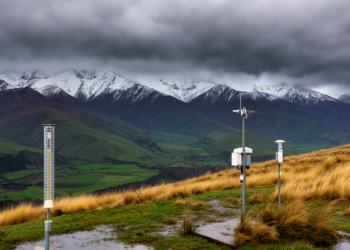
A hybrid Hidden Markov–copula framework identifies five rainfall regimes across Chile and shows the wettest winter regime is persisting significantly ...

A new AI framework combines multimodal sensing, rule-constrained hidden Markov modeling, and Q-learning to generate piano fingerings that are accurate, ...

Researchers have built a lightweight hidden Markov model that learns France's large-scale weather regimes from just ten rain gauges and ...

Researchers have developed an automated hidden Markov model method that objectively measures the weak interfacial zone in coal gangue lightweight ...


Embark on a thrilling journey of discovery with Scienmag.com—your ultimate source for cutting-edge breakthroughs. Immerse yourself in a world where curiosity knows no limits and tomorrow’s possibilities become today’s reality!