


Depolymerized Lignin Precursor Engineering Enhances Hard Carbon Anodes for Sodium Batteries
Researchers developed a depolymerized lignin precursor engineering method that enables hard carbon anodes to deliver high reversible capacity and 91 ...
Researchers developed a depolymerized lignin precursor engineering method that enables hard carbon anodes to deliver high reversible capacity and 91 ...

Regulating the carbonization temperature of sucrose-derived hard carbon microspheres optimizes their microstructure to achieve high capacity, improved efficiency, and stable ...

A comprehensive scientific review evaluates how tailoring the chemical architectures and carbonization processes across diverse coal ranks enables scalable hard ...

Researchers synthesized nitrogen-doped hard carbon from waste macadamia nut shells, achieving high initial Coulombic efficiency and durable capacity retention in ...

Researchers developed hard carbon sodium-ion battery anodes from sweet potato starch using diammonium hydrogen phosphate to suppress foaming and tailor ...

A core–shell antimony and hard carbon composite anode achieved a charge capacity of 482.4 mAh g−1 and retained 95.4 percent ...

A review examines how olive pomace can be converted into carbon electrode materials for supercapacitors and batteries, highlighting the interplay ...

A review argues that competing sodium-storage models for hard carbon anodes converge on a multi-stage adsorption-intercalation-filling framework, guiding precursor design ...
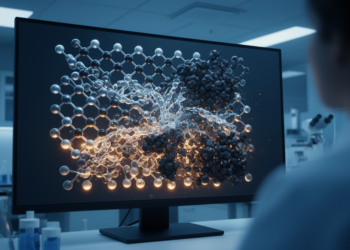
Oxford chemists used machine learning-driven atomistic simulations to show how the polymer PVDC breaks down into hard carbon, whose five- ...
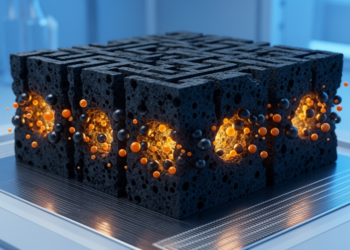
An iodine-mediated cross-linking strategy creates starch-derived hard carbon with sub-nanometer ultramicropores and carbonyl-rich surfaces, confining electrolyte solvation to build a ...


Embark on a thrilling journey of discovery with Scienmag.com—your ultimate source for cutting-edge breakthroughs. Immerse yourself in a world where curiosity knows no limits and tomorrow’s possibilities become today’s reality!