

Moisture and measurement flaws may mask filler effects in epoxy nanocomposites
A new study finds that moisture absorption and coaxial measurement limitations, not the fillers, dominated the dielectric response of epoxy ...
A new study finds that moisture absorption and coaxial measurement limitations, not the fillers, dominated the dielectric response of epoxy ...

A new Vitrobot-based protocol produces graphene oxide cryo-EM grids with 55 percent average coverage and supports apoferritin and β-galactosidase reconstructions ...
A sweeping review finds graphene-based biosensors report extraordinary detection limits that are often extrapolated, rarely clinically validated, and still blocked ...

Researchers created magnetic carbon beads doped with graphene and cobalt that completely degrade the antibiotic sulfamethoxazole within 20 minutes while ...
Researchers report a one-pot, ultrasound-assisted synthesis of avidin-functionalized reduced graphene oxide that enabled a label-free electrochemical aptamer sensor for human ...
A computationally optimized graphene-oxide optical sensor modeled resonance shifts associated with mercury, lead and zinc, but the device has not ...
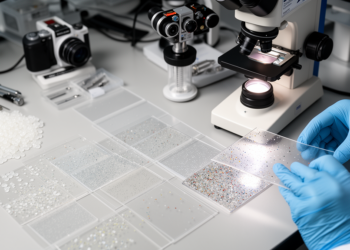
An experiment using multi-objective Bayesian optimization mapped the strength–stretchability trade-off in polyethylene composite films and linked it to molecular alignment ...

A laboratory study reports that a WO3/Fe2O3/graphene oxide nanocomposite produced 25.26 mmol g−1 of hydrogen under visible light over 10 ...

A Frontiers in Carbon research collection led by women scientists showcases carbon nanomaterials advancing water treatment, flexible sensors, biomedical devices ...

A Kirchhoff-based circuit model explains why graphene oxide and PEDOT blends show a resistivity minimum at 78 percent PEDOT but ...


Embark on a thrilling journey of discovery with Scienmag.com—your ultimate source for cutting-edge breakthroughs. Immerse yourself in a world where curiosity knows no limits and tomorrow’s possibilities become today’s reality!