


AI Moves to the Heart of Radiotherapy as Digital Twins Loom
A new Nature Reviews Clinical Oncology review maps how artificial intelligence, from auto-contouring to digital twins, is transforming radiation therapy ...
A new Nature Reviews Clinical Oncology review maps how artificial intelligence, from auto-contouring to digital twins, is transforming radiation therapy ...

A new conceptual review argues that AI hallucinations in science classrooms should be understood as epistemic pollution that can redistribute ...

A systematic review of 80 studies finds AI in science education surging since 2020, dominated by adaptive learning and higher ...
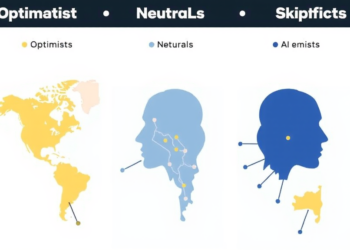
A cluster analysis of 237 U.S. university students reveals three distinct perception profiles of generative AI—optimists, neutrals, and skeptics—with frequency ...
New peer-reviewed research from University of Phoenix scholars found that frequent generative AI use among online adult learners was associated ...

A new viewpoint in the Journal of General Internal Medicine warns that AI-generated clinical documentation is not just recording medical ...

Researchers at Peking University have developed SynCraft, a framework that uses large language models to predict precise atom-level edit sequences ...

A new study finds that undergraduates used generative AI in three distinct cognitive modes—passive, active, and constructive—while no evidence emerged ...
A new perspective in Communications Psychology argues that scientists using AI tools must adopt systematic epistemic reflexivity to protect the ...

A survey of 205 Israeli cancer patients identified four distinct information-seeking archetypes, with religiosity the strongest differentiator and generative AI ...


Embark on a thrilling journey of discovery with Scienmag.com—your ultimate source for cutting-edge breakthroughs. Immerse yourself in a world where curiosity knows no limits and tomorrow’s possibilities become today’s reality!