


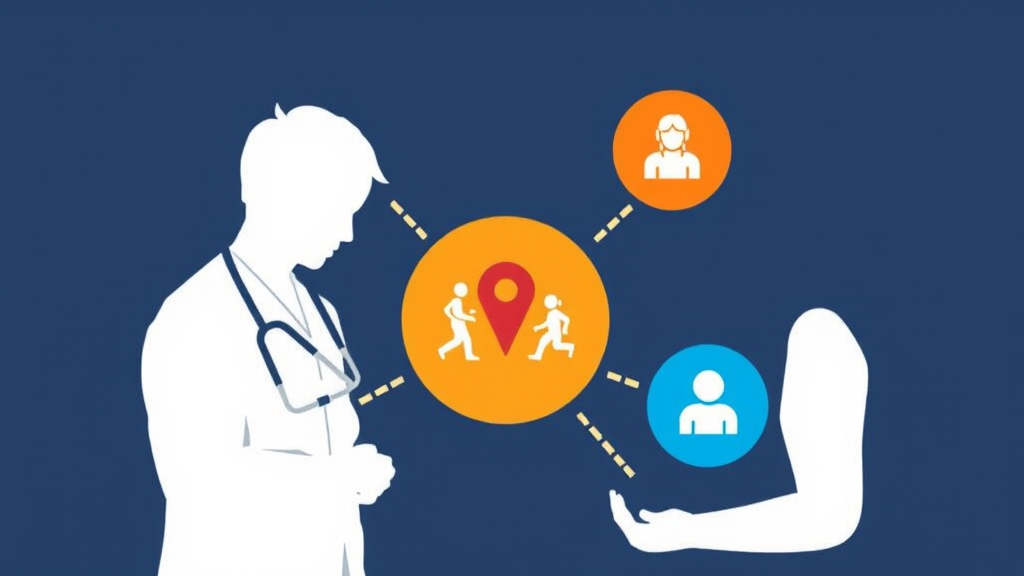
A cancer diagnosis rarely arrives with a manual. In the weeks between the first worrying symptom and the start of treatment, patients confront a bewildering array of choices: which physician to trust, which hospital to enter, whether to pursue chemotherapy, biological therapy, radiation, surgery, or a clinical trial. A new study from Tel Aviv University, published in Supportive Care in Cancer, offers one of the most detailed maps yet of how patients actually navigate that turbulent period, and its central finding is striking: there is no single patient journey. Instead, the researchers identified four fundamentally different information-seeking archetypes, each shaped by a distinct blend of age, education, digital habits, and—most powerfully—religiosity.
The study, led by Neta Shanwetter Levit and Mor Saban of Tel Aviv University’s Gray Faculty of Medical and Health Sciences, surveyed 205 adult cancer patients in Israel between February and December 2025. Participants had all received a cancer diagnosis within the previous two years, and each completed a structured questionnaire tracing their reliance on eleven information sources across two critical phases: from symptom onset to diagnosis, and from diagnosis to the initiation of treatment. The sources ranged from oncologists and family physicians to spouses, social media, medical databases, patient organizations, alternative medicine, religious guidance, and, notably, generative artificial intelligence tools.
The questionnaire itself was the product of an unusually rigorous development process. The researchers conducted three rounds of semi-structured interviews with oncology patients—seven, ten, and sixteen participants respectively—to identify the key decision points and influences along the care journey. They then consulted senior oncologists and family medicine physicians to refine the instrument’s clinical relevance, and pilot-tested the final version with 37 patients across breast cancer, melanoma, thyroid, ovarian, and lymphoma diagnoses. The resulting Patient Decision Agents Questionnaire achieved a Cronbach’s alpha of 0.87, indicating good internal consistency, before being deployed to the full study sample.
When the researchers applied K-means cluster analysis to the 22 information-source variables—eleven sources measured at two time points—four distinct patient profiles emerged, validated by convergence across silhouette coefficient, Calinski–Harabasz index, and gap statistic measures. The largest group, accounting for 38.8 percent of participants, was the Family-Centered archetype: patients who leaned heavily on spouses and relatives for information and decision support, with the strongest family reliance of any group at a mean of 4.1 on a five-point scale, while showing minimal engagement with digital channels. The second largest, at 27.6 percent, were the Digital Natives, who curated information aggressively through internet searches, medical databases, social media health communities, and patient organizations—and who, despite their digital fluency, used AI tools only modestly.
The remaining two archetypes rounded out a picture of profound diversity. The Balanced Traditional group, 25.0 percent of the sample, engaged moderately and steadily with every source type, from internet searches to family members to medical professionals, without extreme dependence on any single channel. The smallest group, the Medical Professional-Focused archetype at 8.6 percent, placed near-total trust in physician authority: their mean reliance on their primary oncologist, 4.5, was the highest score observed across all sources and all archetypes, while their use of internet sources, medical databases, and AI tools was the lowest of any cluster. Crucially, 84.6 percent of this group identified as traditional, religious, or ultra-Orthodox, in sharp contrast to the predominantly secular composition of the other three clusters.
That pattern made religiosity the single strongest differentiator between archetypes, statistically significant at p = 0.005 with a Cramér’s V of 0.25. Age, education, health literacy, and self-management confidence also differed significantly across groups. The researchers argue that this finding challenges deficit-based models of patient engagement, in which lower information seeking is interpreted as disengagement. For religious patients, they suggest, deferring to physician authority may represent an active alignment with deeply held cultural and spiritual values about medical knowledge and decision-making authority—an epistemological framework as coherent as the autonomy-driven model assumed by mainstream shared decision-making theory, even if it looks very different from it.
The temporal dimension of the data added another layer of insight. Across all archetypes, information seeking intensified after diagnosis: reliance on family members rose to a mean of 3.27, internet searching to 3.20, engagement with additional medical providers to 2.95, and social media use to 2.75, all statistically significant changes. Importantly, patients did not abandon their initial sources in favor of new ones; they accumulated them, a triangulation strategy the authors interpret as a way of building confidence and resolving uncertainty in the face of high-stakes decisions. The diagnosis, in effect, triggers an expansion of the informational repertoire rather than a replacement of it.
One source conspicuously failed to follow that trend: generative AI. AI-based tools remained the least utilized digital resource throughout the entire patient journey, with mean scores of 1.67 before diagnosis and no significant change afterward, and the pattern held even among younger, digitally sophisticated patients. The Digital Natives, the most AI-friendly group, still averaged only 2.9 on AI tool use. The authors suggest that technological innovation alone is insufficient—AI tools must earn the trust and meet the personalized guidance needs of patients making emotionally charged medical decisions. They also caution that their data were collected relatively early in the public diffusion of consumer-facing generative AI; recent United States surveys indicate that nearly three in ten adults now use AI chatbots for health information at least monthly, almost double the share from mid-2024, so the picture may shift rapidly.
The qualitative arm of the study revealed how heavy the decisional burden actually feels. Of the 115 participants who answered open-ended questions about their dilemmas, 86 percent reported significant decision-making struggles. Two themes dominated: treatment selection, cited by 57 respondents, who weighed chemotherapy against biological therapy, radiation, clinical trials, and surgical versus non-surgical approaches; and choice of healthcare provider or facility, cited by 40, who juggled expertise, accessibility, wait times, and institutional resources. Smaller clusters of patients wrestled with timing and urgency, conflicting medical opinions, side effects and quality of life, and clinical trial participation. The authors interpret this near-universal dilemma burden as a systemic rather than individual failure: health systems that emphasize informed consent and shared decision-making may inadvertently transfer the weight of deliberation onto patients without providing adequate scaffolding—time, guidance, or emotional support—for carrying it.
The study’s implications point away from one-size-fits-all protocols and toward differentiated decision support. The authors propose brief screening at diagnosis to identify a patient’s archetype and trigger tailored interventions: algorithm-supported decision aids for Digital Natives, facilitated family meetings for Family-Centered patients, and culturally sensitive, physician-guided deliberation for Medical Professional-Focused patients. They acknowledge the limits of generalizing from a single national context—Israel’s universal coverage, high digital penetration, and pronounced religious diversity shape the specific configuration of archetypes—and note that in multi-payer systems like the United States, provider-selection dilemmas may intensify under insurance constraints, while in collectivist cultures family-mediated decision-making may loom even larger. Still, the core conclusion travels well: cancer patients follow genuinely different pathways through medical uncertainty, and health systems that fail to recognize that heterogeneity risk leaving the most vulnerable patients to navigate their most consequential decisions alone.
Subject of Research: Information-seeking patterns and decision-making pathways of adult cancer patients from symptom onset to treatment initiation
Article Title: Beyond one-size-fits-all: mapping information-seeking and decision-making pathways in cancer care
Article References: Shanwetter Levit, N., & Saban, M. (2026). Beyond one-size-fits-all: mapping information-seeking and decision-making pathways in cancer care. Supportive Care in Cancer, 34(10), Article 1003. https://doi.org/10.1007/s00520-026-11250-4
Image Credits: AI Generated
DOI: 10.1007/s00520-026-11250-4
Keywords: cancer care, information seeking, decision making, patient archetypes, shared decision-making, generative AI, digital health, religiosity, oncology, patient-centered care, decision support, Supportive Care in Cancer
Cite Scienmag News
Nathaniel Bowman. (September 22, 2026). Cancer Patients Follow Four Distinct Paths When Seeking Information, Study Finds. Scienmag. https://scienmag.com/cancer-patients-follow-four-distinct-paths-when-seeking-information-study-finds/
Nathaniel Bowman. "Cancer Patients Follow Four Distinct Paths When Seeking Information, Study Finds." Scienmag, 22 September 2026, https://scienmag.com/cancer-patients-follow-four-distinct-paths-when-seeking-information-study-finds/. Accessed 5 October 2026.
Nathaniel Bowman. "Cancer Patients Follow Four Distinct Paths When Seeking Information, Study Finds." Scienmag. September 22, 2026. https://scienmag.com/cancer-patients-follow-four-distinct-paths-when-seeking-information-study-finds/


