


Chemically Reprogrammed Mouse Embryo Models Advance to Early Organogenesis Without Transgenes
Researchers have established transgene-free mouse embryo models using chemical reprogramming that replicate development through early organogenesis.
Researchers have established transgene-free mouse embryo models using chemical reprogramming that replicate development through early organogenesis.

Genetic deletion of the gastrula-stage posterior enhancer p-Enh disrupts neuromesodermal progenitor composition in mice by expanding mesoderm-primed subpopulations and driving ...

Researchers have detailed the complete embryogenesis and retinal determination gene expression of the troglophile cave spider Tegenaria pagana, providing an ...

Researchers identified a conserved Nodal-dependent enhancer in amphioxus Chordin that directs reporter gene expression to the dorsal organizer in zebrafish ...

Experiments in Xenopus laevis demonstrate that the blastocoel roof of the blastula autonomously undergoes gastrulation to construct complete dorsal body ...
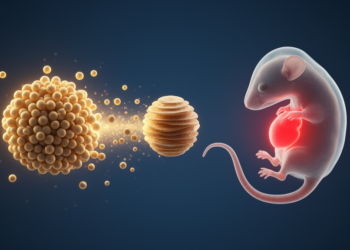
Researchers generated mouse embryo models entirely from chemically induced totipotent-like stem cells that self-organized through gastrulation, blood formation and beating ...
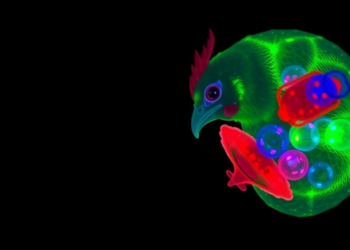
Researchers have generated FuChi, the first viable Fucci cell cycle reporter line in an avian species, revealing that S phase ...
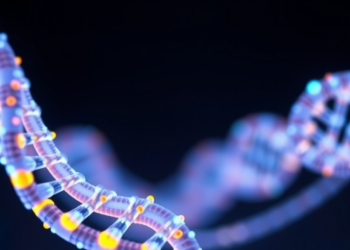
A new light-based barcoding technique called scSTAMP-seq stamps spatial coordinates onto individual cells using photocleavable DNA tags, enabling joint transcriptomic ...

A new Nature Neuroscience study shows that the mammalian brain is assembled from two parallel lineage-restricted progenitors that emerge simultaneously ...


Embark on a thrilling journey of discovery with Scienmag.com—your ultimate source for cutting-edge breakthroughs. Immerse yourself in a world where curiosity knows no limits and tomorrow’s possibilities become today’s reality!