


Optimized Deep Learning Model Classifies Transformer Faults with High Dataset Accuracy
Researchers developed an optimized deep reinforcement learning framework that achieved 97.80 percent accuracy in classifying transformer faults within a dataset.
Researchers developed an optimized deep reinforcement learning framework that achieved 97.80 percent accuracy in classifying transformer faults within a dataset.

Researchers developed a cascaded model predictive control architecture combining feedback linearization, quasi-LPV modeling, and neural networks to stabilize quadrotors under ...

A unified hybrid model predictive control strategy maintains rated current limits and restores balanced operation in dual three-phase motors during ...

Researchers demonstrated a model-based Bayesian regression framework that estimates posterior probability distributions for wind turbine sensor and actuator faults, outperforming ...

Simulations demonstrate that an extended multi-model switching and tuning control strategy achieves accurate fault diagnosis and reduces attitude deviations for ...
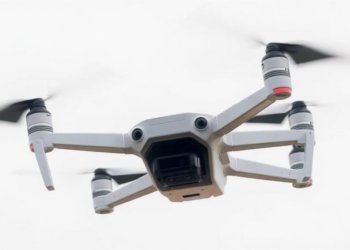
Researchers in Algeria showed that reinforcement learning agents can retune a standard PID drone controller in real time within safety ...

Chinese researchers have developed a predefined-time fault-tolerant control scheme that guarantees precise, disturbance-proof automatic carrier landings even when aircraft suffer ...

Researchers have developed an adaptive fuzzy dynamic surface control strategy that guarantees finite-time trajectory tracking for unmanned helicopters despite input ...
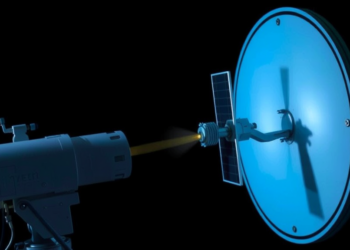
Researchers have developed an adaptive finite-time disturbance observer-based fault-tolerant control scheme that reduces satellite post-fault pointing error by 98.8 percent ...


Embark on a thrilling journey of discovery with Scienmag.com—your ultimate source for cutting-edge breakthroughs. Immerse yourself in a world where curiosity knows no limits and tomorrow’s possibilities become today’s reality!