


MOF-Derived Carbons Show Promise as Next-Generation Electrode Materials
A new review in Ionics examines how metal-organic framework-derived carbons and their composites could serve as next-generation electrode materials for ...
A new review in Ionics examines how metal-organic framework-derived carbons and their composites could serve as next-generation electrode materials for ...
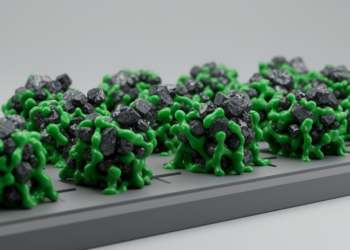
A polyaniline-coated MgCo2O4 hybrid electrode achieved a specific capacitance of 141.93 F g−1 and retained 88.71% of its capacitance over ...
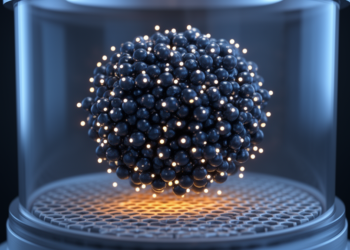
Strontium-modified Co3O4 nanoparticles made by solution combustion showed the best supercapacitor performance at the 2Sr composition, with a specific capacitance ...
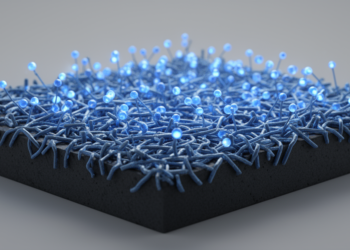
A methylene blue-assisted PANI/MnO2 nanocomposite electrode retained 99.3% of its capacitance after 3000 cycles, and a symmetric supercapacitor built from ...
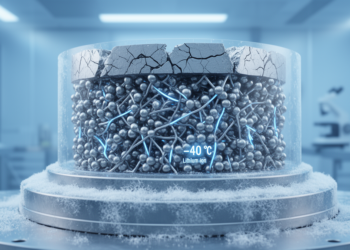
An electrode-level study found that a silicon oxide composite containing tin-antimony alloy and carbon retained about 1,000 mAh g−1 for ...
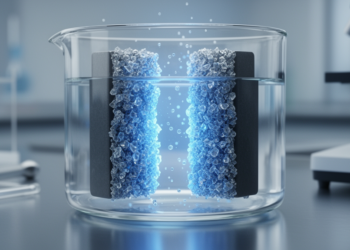
An aqueous asymmetric supercapacitor pairing lanthanum-doped NiWO4 with VN on reduced graphene oxide delivered about 95 Wh per kilogram on ...
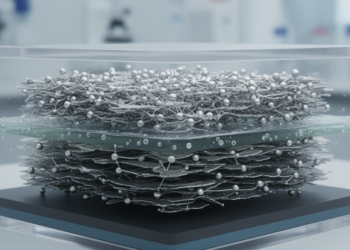
A laboratory study found that 6% nickel-doped MoS2 reached 1,210 F/g in a three-electrode test and 121 Wh/kg in an ...
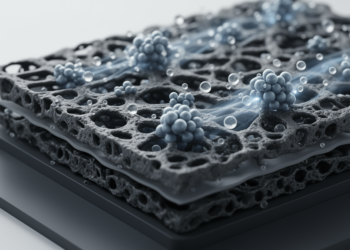
A critical review finds that transition-metal phosphide/carbon supercapacitor studies frequently report inflated performance and calls for consistent testing and mechanism-based ...
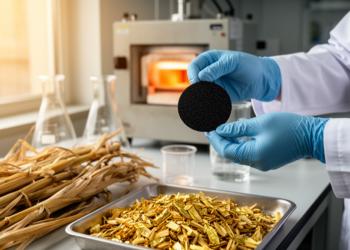
A laboratory electrode study reported a specific capacitance of 1,049.95 F g−1 for a corn-straw biochar, MXene and MnO2 composite, ...
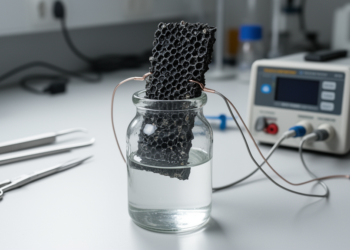
A laboratory NiTe–MoS2/rGO supercapacitor electrode achieved 782 farads per gram and retained 87% of its initial capacity after 5,000 cycles.


Embark on a thrilling journey of discovery with Scienmag.com—your ultimate source for cutting-edge breakthroughs. Immerse yourself in a world where curiosity knows no limits and tomorrow’s possibilities become today’s reality!