


Energy-Based Collapse Criterion Reaches 100% Agreement in RC and Masonry Tests
A new energy-based criterion identified collapse in 415 quasi-static tests of reinforced-concrete elements and masonry wall panels with 100% combined ...
A new energy-based criterion identified collapse in 415 quasi-static tests of reinforced-concrete elements and masonry wall panels with 100% combined ...
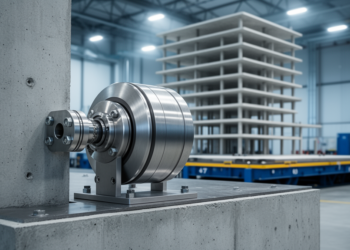
A comprehensive review reveals that inerter-based damping systems can cut building displacement by up to 85 percent during earthquakes, but ...
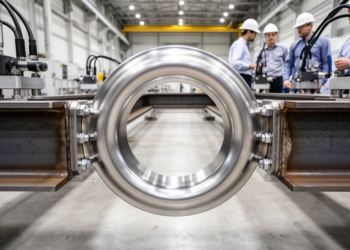
Laboratory tests of a novel externally stiffened ring connection show that welded joints between concrete-filled steel tubular columns and reinforced ...
A first-of-its-kind life-cycle cost analysis shows that concrete tunnel-form buildings, even without special ductility detailing, keep expected earthquake losses below ...

New laboratory tests reveal that lightweight ceramsite aerated concrete block infill walls dramatically alter the stiffness, ductility, and failure modes ...

Researchers have developed a physics-guided neural network that embeds energy conservation and error correction into deep learning to predict seismic ...

A new machine learning framework trained on roughly 434,000 nonlinear earthquake simulations reveals that taller steel buildings need proportionally fewer ...

Researchers have developed closed-form analytical equations that simultaneously design the transverse reinforcement of reinforced concrete columns for both curvature ductility ...

Researchers have validated a simplified preliminary seismic design procedure for low- to medium-rise reinforced concrete buildings that meets modern performance ...
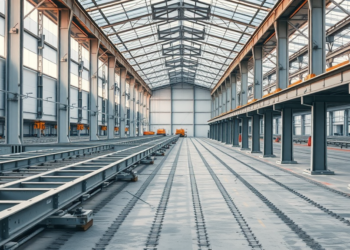
Full-scale cyclic tests and validated finite element simulations show that sustained gravity loading cuts the in-plane seismic capacity of composite ...


Embark on a thrilling journey of discovery with Scienmag.com—your ultimate source for cutting-edge breakthroughs. Immerse yourself in a world where curiosity knows no limits and tomorrow’s possibilities become today’s reality!