


Bottom-Up Clustering Outperforms Traditional Earth Partitions in Capturing Indirect Impacts
A global modeling study reveals that data-driven bottom-up clustering captures indirect human impacts on climate, land, and water far more ...
A global modeling study reveals that data-driven bottom-up clustering captures indirect human impacts on climate, land, and water far more ...

Simulations from the SOLCHECK project reveal that atmospheric background warming amplifies climate sensitivity to solar downturns while internal stratospheric dynamics ...

A new Simon Fraser University study finds that oceans can amplify the non-CO2 warming effects of large-scale reforestation, potentially offsetting ...

A multi-model climate study reveals that agricultural irrigation creates substantial regional radiative forcing hotspots despite producing a minimal net impact ...

A new Earth System Dynamics study formulates two rival schemes for weighting climate model ensembles in Bayesian terms and shows ...
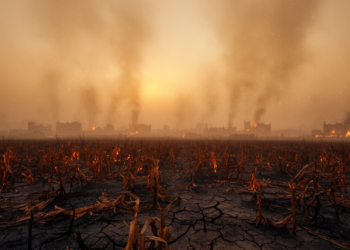
A new climate model study finds that a limited US-Russia nuclear exchange injecting 12 to 24 teragrams of black carbon ...

Scientists digitized nearly 10,000 handwritten weather sheets from Congolese archives, producing over one million daily observations that reveal clear warming ...
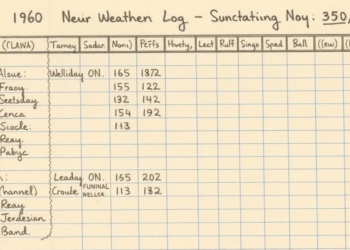
Digitized handwritten weather archives from the Democratic Republic of the Congo show that hot days in the Congo Basin nearly ...
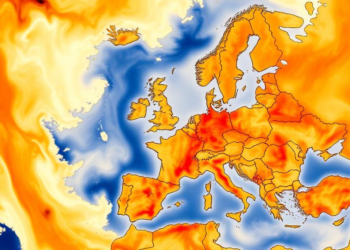
An unsupervised machine learning analysis of ERA5 reanalysis data shows that Western European heatwaves are undergoing structural shifts in their ...

An automated scan of 54 CMIP6 climate models catalogues 73 strong nonlinear surprises, including Arctic sea-ice loss, North Atlantic mixed-layer ...


Embark on a thrilling journey of discovery with Scienmag.com—your ultimate source for cutting-edge breakthroughs. Immerse yourself in a world where curiosity knows no limits and tomorrow’s possibilities become today’s reality!