


Dipeptide Additive Decouples Ion Interactions to Extend Zinc Battery Lifespan
Introducing the dipeptide L-carnosine into zinc sulfate electrolyte remodels the inner Helmholtz plane, suppressing dendrites and hydrogen evolution to stabilize ...
Introducing the dipeptide L-carnosine into zinc sulfate electrolyte remodels the inner Helmholtz plane, suppressing dendrites and hydrogen evolution to stabilize ...

A comprehensive review establishes a multiscale framework integrating zincophilic chemistry, lattice matching, and three-dimensional structural engineering to eliminate zinc dendrites ...

Researchers developed a localized high-concentration electrolyte using methyl tert-butyl ether to stabilize sodium metal anodes and polyanionic cathodes without persistent ...

A laboratory study found that a bikitaite-infused cellulose separator improved high-rate NCM90 cathode capacity and promoted uniform lithium deposition in ...
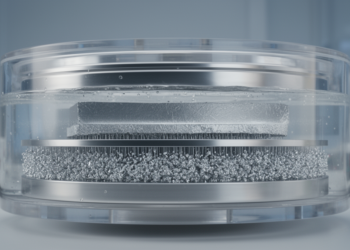
A laboratory study found that an ultratrace sulfosuccinic acid additive regulated the zinc–electrolyte interface, enabling high-capacity, fast-charging aqueous zinc cells ...
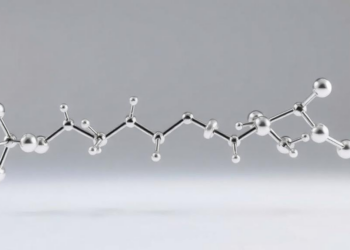
Researchers report that the naturally occurring amino acid sarcosine stabilizes zinc metal anodes in aqueous batteries by simultaneously restructuring the ...
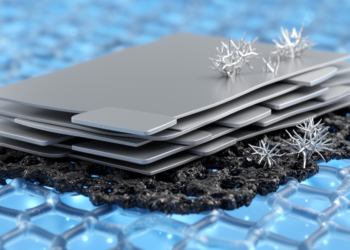
Researchers in China have engineered a MXene and sulfur-doped graphene coating that suppresses dendrites, hydrogen evolution and corrosion in aqueous ...
Researchers have developed a modular etching–brushing–soaking protocol that standardizes lithium metal surfaces, dramatically improving reproducibility and full-cell battery performance.

Researchers coated traditional Xuan paper with hydroxypropyl cellulose to create a battery separator that retains 98 percent of its capacity ...
A new review in Ionics synthesizes recent advances in electrode materials, interfacial chemistry, and stabilization strategies that could unlock longer-lasting, ...


Embark on a thrilling journey of discovery with Scienmag.com—your ultimate source for cutting-edge breakthroughs. Immerse yourself in a world where curiosity knows no limits and tomorrow’s possibilities become today’s reality!