


Shifting Mazes Slow Human Problem-Solvers, Virtual Experiment Shows
A virtual maze that reconfigures itself after every trial revealed that unstable environments impose measurable costs on spatial problem-solving efficiency, ...
A virtual maze that reconfigures itself after every trial revealed that unstable environments impose measurable costs on spatial problem-solving efficiency, ...

A systematic scoping review of 182 studies finds that research on children's executive function in Africa remains sparse, geographically concentrated, ...

A 12-week trial found that high-intensity interval training, but not moderate continuous exercise, significantly raised resting plasma BDNF and improved ...
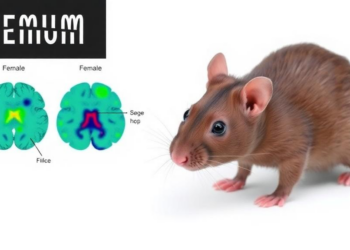
A new study shows that selectively reducing the GluN2A subunit of NMDA receptors in the adult hippocampus disrupts spatial exploration ...

A new theoretical framework argues that creativity emerges not from any single brain region, trait, or tool but from changing ...

A large EEG study identifies sustained parietal alpha/beta suppression as a reliable, domain-general neural signature of cognitive flexibility, while frontal ...

New fMRI research shows that insomnia disrupts the brain's task-switching networks, with sleep-related stimuli capturing attention and derailing the neural ...

A randomized controlled trial found that a 12-week multimodal art intervention significantly improved attention and executive function in children with ...

A Yale study of 279 participants shows that existing food preferences distort associative learning, with initial reinforcement of priors making ...

Simulations with known ground truth show that Bayesian distributional latent variable models combined with adaptive active learning estimate executive function ...


Embark on a thrilling journey of discovery with Scienmag.com—your ultimate source for cutting-edge breakthroughs. Immerse yourself in a world where curiosity knows no limits and tomorrow’s possibilities become today’s reality!