


Carbon dioxide removal could boost the world economy, but gains would be unevenly shared
A deep learning model finds that idealized carbon dioxide removal would lift economic output almost everywhere, but only Asia and ...
A deep learning model finds that idealized carbon dioxide removal would lift economic output almost everywhere, but only Asia and ...

A qualitative study of eight interviews in urban and peri-urban Bangladesh finds that heatwaves intensify health problems, mobility barriers, and ...

Legal scholars propose reframing ocean justice around anti-subordination theory to protect Indigenous and coastal fishing communities from disproportionate burdens.

A new essay argues that engaged research approaches such as co-production hold promise for transformative climate adaptation but remain held ...

A new editorial argues that loss and damage finance must move beyond humanitarian relief toward justice-oriented, community-centered climate action.
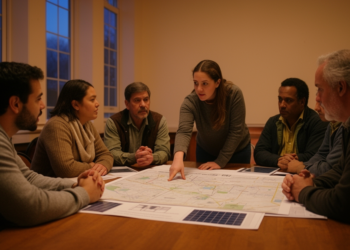
Nine studies show that decarbonization succeeds or fails on distribution, participation, recognition and legitimacy as much as on technology.

A content analysis of 143 Brazilian news articles shows COP30 coverage framed water and sanitation mostly as infrastructure and adaptation ...

A new 700-page Oxford University Press handbook edited by UC Merced's Paul Almeida gathers more than 60 scholars across 39 ...

A new EU-wide modelling study shows that combining carbon pricing with standards, subsidies and transfers can resolve a fundamental trade-off ...

A global study of 1,029 cities finds that assuming uniform social vulnerability has led scientists to underestimate North-South inequality in ...


Embark on a thrilling journey of discovery with Scienmag.com—your ultimate source for cutting-edge breakthroughs. Immerse yourself in a world where curiosity knows no limits and tomorrow’s possibilities become today’s reality!