

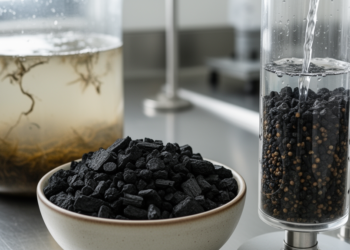
Olive mill waste biochar removes organic pollutants from wastewater
A laboratory study in Jordan found that biochar produced from olive mill solid waste removed up to 77.45% of COD ...
A laboratory study in Jordan found that biochar produced from olive mill solid waste removed up to 77.45% of COD ...

A laboratory study found that peptide-modified nanocellulose made from dairy sludge and crustacean waste achieved reported removal efficiencies of 97.80% ...
Researchers have converted tin recovered from solder in waste printed circuit boards into 7.6-nanometre tin oxide nanoparticles that completely degrade ...
A Green Machine Learning benchmark on Melbourne wastewater data shows XGBoost matching deep learning accuracy for COD and nitrogen prediction ...
Researchers in Mexico have created graphene oxide-modified titanium dioxide nanotube-nanoring photoanodes that degrade 85 percent of methylene blue under solar ...
A hybrid ferric chloride precipitation and sequencing batch reactor system removes over 99 percent of sulfide and organic pollution from ...
A controlled factorial study finds that peracetic acid matches chlorine's ability to kill E. coli in hospital wastewater while avoiding ...
A new Iranian study comparing powdered and liquid polyaluminum chloride with recycled water treatment sludge finds that liquid PACl combined ...
South African researchers found that just 2 grams of biochar per litre boosted methane production from slaughterhouse wastewater by over ...
A new study shows that combining ozone, hydrogen peroxide, and ultraviolet radiation degrades up to 99 percent of acetaminophen in ...

Embark on a thrilling journey of discovery with Scienmag.com—your ultimate source for cutting-edge breakthroughs. Immerse yourself in a world where curiosity knows no limits and tomorrow’s possibilities become today’s reality!