


Soccer Change of Direction Protocol Proves Feasible in Pilot Trial
A pilot study confirms that a soccer-specific change-of-direction testing protocol incorporating ball control, unexpected visual cues, and limb dominance is ...
A pilot study confirms that a soccer-specific change-of-direction testing protocol incorporating ball control, unexpected visual cues, and limb dominance is ...

A six-week randomized trial in collegiate basketball players revealed that volume-matched short-distance and longer-distance repeated sprints elicit distinct neuromuscular and ...

Velocity-based squat training produced greater reactive agility improvements than percentage-based training in collegiate basketball players, while gains in preplanned change-of-direction ...

A single-blind randomized trial in collegiate male tennis players demonstrated that eight weeks of court-based sprint interval training produced superior ...

A systematic review of 13 studies found that high-intensity interval training enhances aerobic and tennis-specific endurance in trained players, though ...

A mathematical model based on body mass, countermovement jump, and change of direction classified youth and professional football players with ...

A study of national-level youth soccer players found that inter-limb asymmetries in balance and change of direction progressively decrease as ...

A systematic review and Bayesian meta-analysis revealed that conditioning activities do not produce a clear or reliable acute performance enhancement ...

An exploratory cross-sectional study identifies field-based fitness correlates of 505 change-of-direction test times in children aged 9 to 10 years.
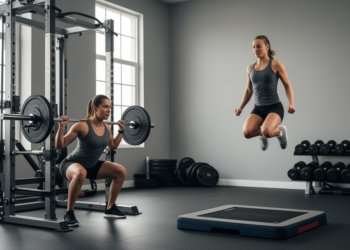
An eight-week randomized trial in resistance-trained men found that reversing the order of squats and countermovement jumps changed almost nothing ...


Embark on a thrilling journey of discovery with Scienmag.com—your ultimate source for cutting-edge breakthroughs. Immerse yourself in a world where curiosity knows no limits and tomorrow’s possibilities become today’s reality!