

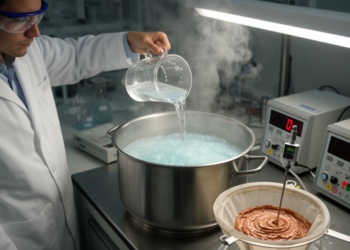
Co-precipitation Temperature Fine-Tunes Industrial Cu-Zn-Al Catalysts for Methanol Synthesis
A study in Catalysis Letters finds that the temperature of co-precipitation controls precursor phases, copper dispersion and Cu-ZnO interactions in ...
A study in Catalysis Letters finds that the temperature of co-precipitation controls precursor phases, copper dispersion and Cu-ZnO interactions in ...

A peer-reviewed review finds that viologen-linked covalent organic frameworks combine permanent positive charge, reversible redox activity and tunable pores for ...

A solid-state CO2-air/H2 fuel cell using a CuNi-SDC cathode catalyst achieved a maximum power density of 126.6 W·m⁻² and a ...

A new review argues that biomolecules from plants, algae and bacteria can replace toxic solvents and energy-intensive processes in the ...
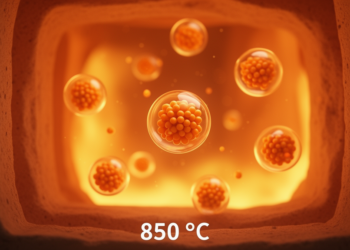
Researchers at Sichuan University have shown that partially converting the surface of ceria into amorphous silicates keeps crystallites at 7.1 ...
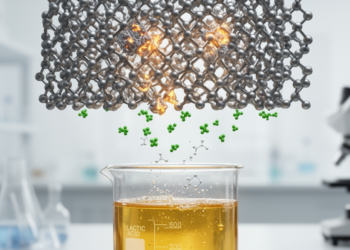
Researchers engineered deliberate structural defects into a nickel metal-organic framework, boosting glucose-to-lactic acid conversion and enabling raw biomass feedstocks such ...
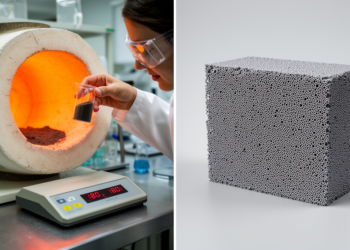
A parametric hydrothermal study shows niobium pentoxide converts fully into porous sodium niobate, with 180 degrees Celsius for 90 minutes ...
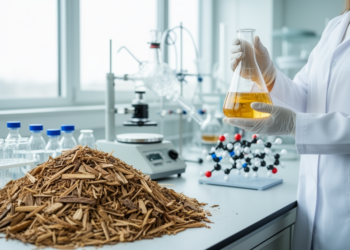
A new review maps how biomass-derived platform molecules such as furfural, levulinic acid, and succinic acid are replacing petroleum feedstocks ...
A new review finds that electromagnetic induction heating can dramatically accelerate biomass conversion while improving energy efficiency and product selectivity, ...

Researchers have computationally designed artificial cysteine proteases from scratch that cleave peptide bonds with rate enhancements of up to ten ...


Embark on a thrilling journey of discovery with Scienmag.com—your ultimate source for cutting-edge breakthroughs. Immerse yourself in a world where curiosity knows no limits and tomorrow’s possibilities become today’s reality!