

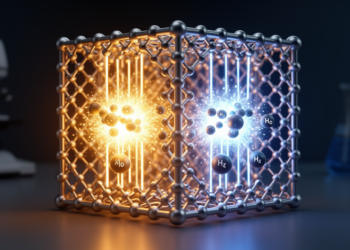
Dual-Site Catalysts and 3D Nanoreactors Push CO2 Hydrogenation Forward
A new review details how dual-site catalysts and three-dimensional nanoreactors boost the activity, selectivity and stability of thermo-catalytic CO2 hydrogenation.
A new review details how dual-site catalysts and three-dimensional nanoreactors boost the activity, selectivity and stability of thermo-catalytic CO2 hydrogenation.

A new review in Catal argues that iron-based catalysts, boosted by cobalt, palladium, and engineered supports, are among the most ...
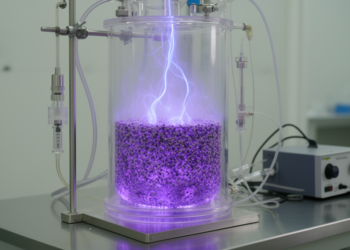
A 2026 mini review finds that fluidized particles can refresh catalytic surfaces and enhance plasma-driven reactions, but excessive loading or ...

Researchers have shown that carbon dioxide can be electrochemically converted into solid carbon in molten lithium-potassium carbonate salt and diffused ...

Brazilian researchers show that phosphatizing niobium pentoxide with an optimized dose of phosphoric acid dramatically boosts the selective photocatalytic conversion ...

A new review in Ionics details how photoelectrochemical systems can convert carbon dioxide into methanol with record efficiencies, while identifying ...

In the realm of energy research, innovative solutions aimed at combating climate change are continuously emerging, with the recent work ...

In a groundbreaking study emerging from Ohio State University, chemists have unveiled a pioneering framework that advances our understanding of ...

The U.S. Air Force has recently awarded a $1.25 million contract to the innovative startup SkyNano, marking a significant leap ...

In the relentless pursuit to combat climate change, the electrochemical conversion of carbon dioxide (CO₂) and carbon monoxide (CO) into ...


Embark on a thrilling journey of discovery with Scienmag.com—your ultimate source for cutting-edge breakthroughs. Immerse yourself in a world where curiosity knows no limits and tomorrow’s possibilities become today’s reality!