

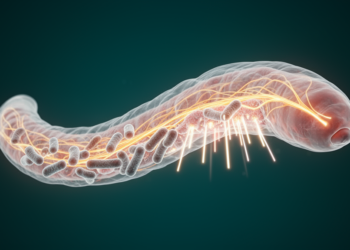
How a Pathogen Hijacks Nerve Signals to Break Down a Worm’s Skin
Researchers discovered that the bacterium Pseudomonas aeruginosa exploits neuronal signaling in C. elegans to impair lysosomal function and disrupt collagen ...
Researchers discovered that the bacterium Pseudomonas aeruginosa exploits neuronal signaling in C. elegans to impair lysosomal function and disrupt collagen ...
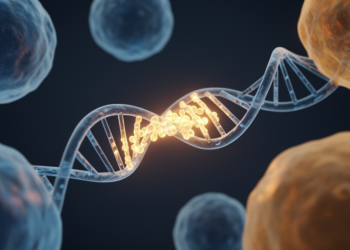
New research in C. elegans reveals that the gene lin-15A enables natural cell identity conversion by weakening chromatin-based safeguards rather ...
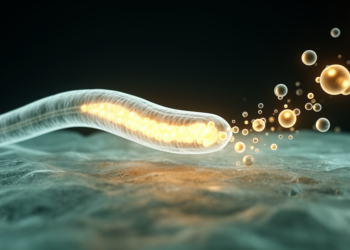
A new study in PLOS Biology shows that the nuclear hormone receptor NHR-68 links intestinal linoleic acid metabolism to both ...

Goethe University Frankfurt researchers Johannes Petry and Seda Koyuncu have each won an ERC Starting Grant worth up to 1.5 ...
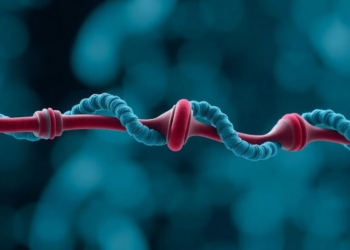
A Nature Aging commentary highlights research identifying lipid acyl-chain elongation as a conserved, causal and potentially reversible hallmark of aging ...
A cross-species study in Nature Aging shows that lipid acyl chains lengthen consistently with age across mice, worms, flies and ...

A polysaccharide from the traditional Chinese herb Gastrodia elata extended lifespan in worms and improved memory, muscle strength, and gut ...
A newly isolated wild C. elegans strain from Mexico City shows that the laboratory reference N2 strain has transcriptionally and ...

A new study in Biogerontology shows that removing peptone from the standard nematode growth medium prevents bacterial and fungal contamination ...

An ethyl acetate extract of Perilla frutescens leaves extended lifespan, reduced fat storage, and boosted stress resistance in C. elegans ...


Embark on a thrilling journey of discovery with Scienmag.com—your ultimate source for cutting-edge breakthroughs. Immerse yourself in a world where curiosity knows no limits and tomorrow’s possibilities become today’s reality!