

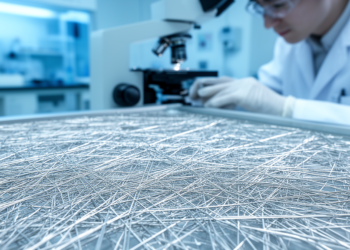
Hardware That Learns: UCLA-Rooted Nanowire Networks Point Toward Physical AI
A Nature Reviews Physics review co-authored by UCLA researchers describes computing platforms in which self-organizing nanowire and nanoparticle networks physically ...
A Nature Reviews Physics review co-authored by UCLA researchers describes computing platforms in which self-organizing nanowire and nanoparticle networks physically ...
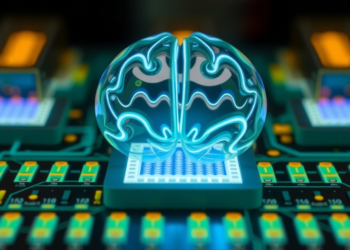
Researchers have built a reconfigurable computing architecture in which molybdenum disulfide dual-gate transistors with ferroelectric gating act as both spiking ...
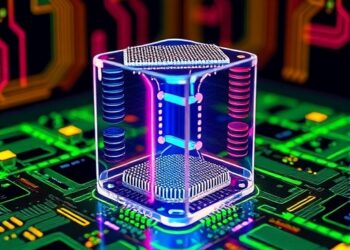
For decades, the most elusive goal in artificial intelligence has been to reproduce one of the brain’s defining tricks: computing ...

In the realms of computer science and artificial intelligence, the quest to create machines that can learn like humans has ...

Our brains remarkably balance staggering computational power with minimal energy consumption, operating at roughly the wattage equivalent of a single ...

In the rapidly advancing world of artificial intelligence and next-generation computing, the pursuit of energy-efficient, brain-inspired architectures has taken a ...

In a groundbreaking development in the realm of neuromorphic electronics, an interdisciplinary research team has successfully engineered a new class ...

A cutting-edge development in the field of robotics has emerged from the University of Michigan: a new autonomous controller that ...


Embark on a thrilling journey of discovery with Scienmag.com—your ultimate source for cutting-edge breakthroughs. Immerse yourself in a world where curiosity knows no limits and tomorrow’s possibilities become today’s reality!