

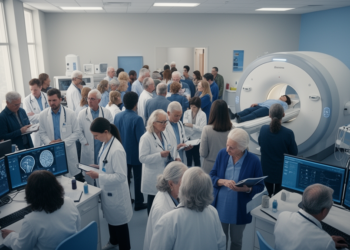
KARI dataset opens multimodal Alzheimer imaging resource for 1,645 adults
The KARI dataset provides 6,217 multimodal imaging acquisitions from 1,645 adults spanning healthy aging, preclinical Alzheimer disease and symptomatic illness.
The KARI dataset provides 6,217 multimodal imaging acquisitions from 1,645 adults spanning healthy aging, preclinical Alzheimer disease and symptomatic illness.
A new JNeurosci study shows that face- and voice-processing brain regions share a common emotional code, representing the same emotion ...
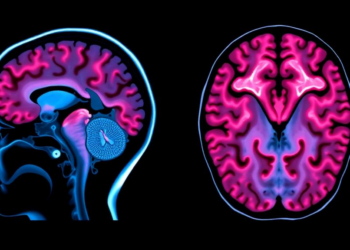
A comprehensive review in the Journal of Neurology synthesizes decades of brain imaging evidence showing that Duchenne and Becker muscular ...
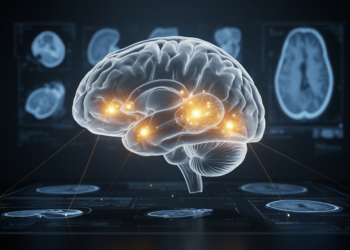
A registration-guided 3D-UNet framework automatically localizes the brain's anterior and posterior commissures on routine CT scans with millimeter precision, enabling ...
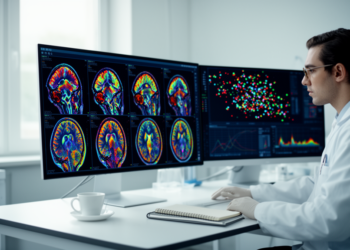
A systematic review of 123 studies maps how artificial intelligence is transforming brain imaging and computer-aided diagnosis of neurological diseases, ...
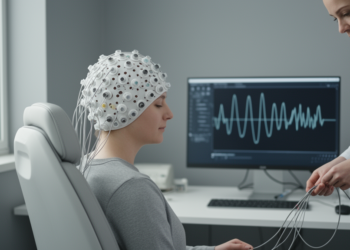
Event-related potentials, or ERPs, are among the most powerful tools in human neuroscience. Recorded through electrodes on the scalp, these ...
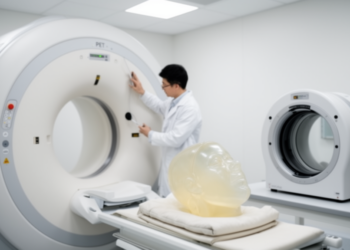
Positron emission tomography (PET) has become an indispensable tool for studying the human brain, from mapping glucose metabolism to detecting ...
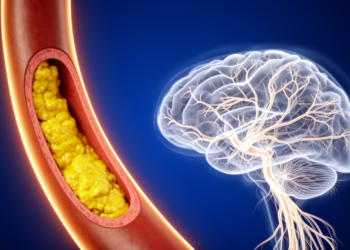
A new diffusion imaging study finds that people with vulnerable carotid plaques show widespread white matter damage linked to inflammatory ...
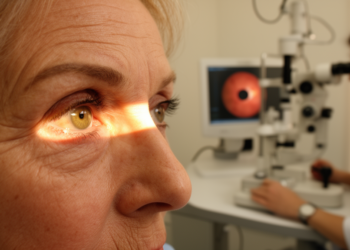
A new meta-analysis of nearly 2.9 million people with diabetes finds that diabetic retinopathy is associated with a 55 percent ...
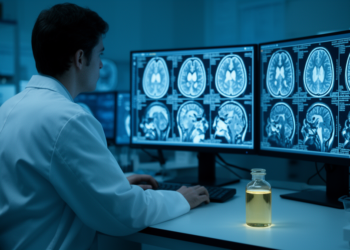
A new MIT-led systematic review finds that brain imaging studies of cannabidiol show no consistent pattern of neural effects on ...


Embark on a thrilling journey of discovery with Scienmag.com—your ultimate source for cutting-edge breakthroughs. Immerse yourself in a world where curiosity knows no limits and tomorrow’s possibilities become today’s reality!