


New Electrochemiluminescence Immunosensor Enables Ultrasensitive Detection of Nectin-4
A novel quenching-type electrochemiluminescence immunosensor achieves ultrasensitive detection of nectin-4 across a wide linear range with a low detection limit.
A novel quenching-type electrochemiluminescence immunosensor achieves ultrasensitive detection of nectin-4 across a wide linear range with a low detection limit.

An engineered E. coli biosensor built on the Pseudomonas putida ttg operon estimated biosynthetic resveratrol concentrations with 92.7 to 93.8 ...

A simulation study reports a five-layer SPR sensor design with a calculated sensitivity of 416.42 degrees per refractive index unit ...

A simulated MXene–graphene terahertz metasurface biosensor achieved a refractive index sensitivity of 1000 GHz per RIU and, with a 1D-CNN, ...

A gold nanoparticle-decorated MBene thin-film transistor array detected salivary microRNA-27a down to 3.2 femtomolar and distinguished a small preliminary cohort ...

A prototype drone carried a gold-nanoparticle lateral-flow sensor that detected dengue antigen at 0.91 micrograms per milliliter and supported QR-code-linked ...
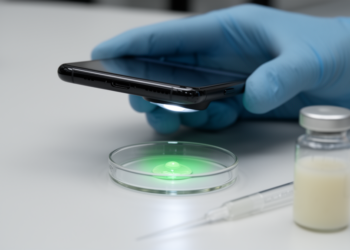
Researchers have built a core-shell Ag@Au nanoparticle biosensor that pairs plasmonic sensing with smartphone-based machine learning to rapidly and selectively ...

A computational design study reports a compact photonic crystal nanocavity biosensor that detects refractive-index changes with extreme precision, offering a ...

Researchers used wearable biosensors during brief stair stepping tests to detect early inflammatory responses to influenza, with heart rate variability ...

A new review highlights how graphene-based electrochemical sensors, from three-electrode systems to field-effect transistors, are achieving record-breaking limits of detection ...


Embark on a thrilling journey of discovery with Scienmag.com—your ultimate source for cutting-edge breakthroughs. Immerse yourself in a world where curiosity knows no limits and tomorrow’s possibilities become today’s reality!