

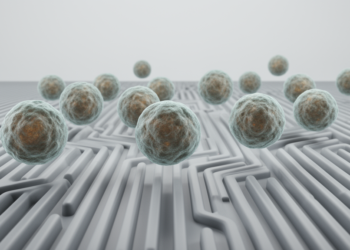
Biogenic nanoparticles advance through controllable surfaces, not green labels
A critical review identifies the biologically acquired capping layer as the most promising—and least controlled—feature of antimicrobial nanoparticles made through ...
A critical review identifies the biologically acquired capping layer as the most promising—and least controlled—feature of antimicrobial nanoparticles made through ...

Researchers used Bacillus velezensis 259 fermentation, guided by whole-genome analysis and response surface optimization, to extract chondroitin sulfate from chicken ...
A new study shows that pH, loading rate, and reactor configuration predictably steer mixed microbial communities fermenting xylose toward lactate, ...
Korean researchers used a CHO cell-based screening platform to identify synonymous codon variants that raise etanercept productivity up to 2.75-fold ...
A new review maps how muscle stem cells, serum-free media, AI-driven compound screening, edible scaffolds, and scalable bioreactors must converge ...
Researchers in China show that a four-parameter Boltzmann model describes poly-γ-glutamic acid batch fermentation by Bacillus subtilis natto far better ...
Researchers have engineered a fed-batch fungal fermentation process that produces oxalic acid at scale as a sustainable leaching agent for ...
Adding cellulose fibers to Streptomyces cultures shrinks pellets, reduces many known antibiotics, and uncouples metabolite production from each species' biosynthetic ...
Researchers cultivated the extremophilic microalga Galdieria sulphuraria on shrimp and aquaculture sludge hydrolysates, yielding protein-rich biomass and phycocyanin while defining ...

Embark on a thrilling journey of discovery with Scienmag.com—your ultimate source for cutting-edge breakthroughs. Immerse yourself in a world where curiosity knows no limits and tomorrow’s possibilities become today’s reality!