

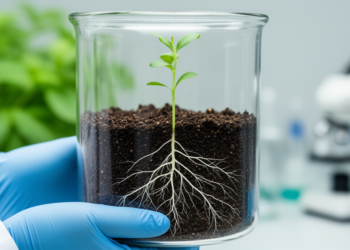
Plants Can Pull Carbon From Soil Through Their Roots, Tracer Study Shows
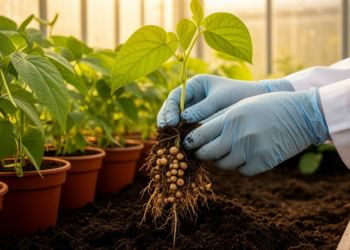
Tracer experiments show Plantago lanceolata and Picea abies seedlings can take up labelled carbon via roots, but recovery in soil ...
Tracer experiments show Plantago lanceolata and Picea abies seedlings can take up labelled carbon via roots, but recovery in soil ...

A new study estimates that temperature-dependent plankton metabolism could account for about 20 ppm of the roughly 90 ppm glacial ...
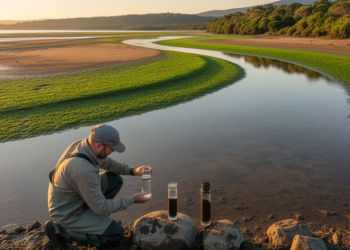
A new study of South Africa's Knysna Estuary finds that bacterial communities in the water and sediments are clearly partitioned, ...
Scientists have, for the first time, implemented the triple isotopic composition of dissolved oceanic oxygen in the fully coupled iLOVECLIM ...

Sea ice in the Southern Ocean supplies particulate organic carbon equivalent to 14.7 percent of phytoplankton production near the ice ...
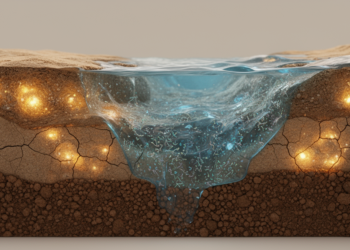
Experiments on sediments from 64 US streams show that drying and rewetting generally produce neutral or suppressed aerobic respiration, prompting ...

A new furthest-first inversion algorithm replaces weighted least squares in the GLODAPv3 ocean biogeochemical data product, eliminating spurious regional biases ...
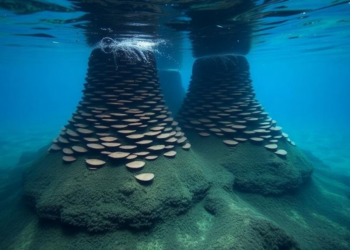
A comprehensive review synthesizing six decades of research shows shallow-water hydrothermal vents act as localized geological forcing that couples seafloor ...

A controlled reburning experiment shows that subsequent fires remove preexisting pyrogenic organic matter both by directly combusting it and by ...
Tropical forests are full of quiet architects. Among them, one plant family stands out for its sheer abundance and diversity: ...


Embark on a thrilling journey of discovery with Scienmag.com—your ultimate source for cutting-edge breakthroughs. Immerse yourself in a world where curiosity knows no limits and tomorrow’s possibilities become today’s reality!