

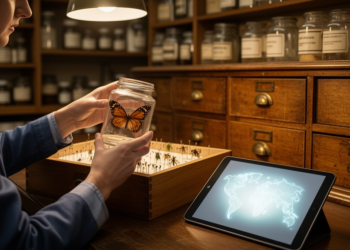
AI Reads Museum Labels and Pins Down Where Specimens Were Collected
A new evaluation of twelve AI models finds that large language models can georeference museum specimen labels with kilometre-scale accuracy, ...
A new evaluation of twelve AI models finds that large language models can georeference museum specimen labels with kilometre-scale accuracy, ...
A perspective combining systems thinking, Darwin Core and GBIF data proposes Systems Entomology, demonstrated with a limited network analysis of ...
A collaborative project is developing a continuously updateable checklist of Georgia’s vascular plants using taxonomic evidence, herbarium vouchers, regional occurrence ...
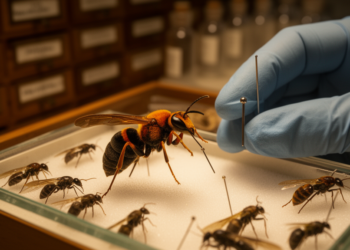
A new survey of Swedish natural history museums has catalogued 216 specimens of the velvet ant Mutilla europaea, some dating ...
A large-scale analysis of marine species names reveals that nearly one in five epithets within the same genus differ by ...
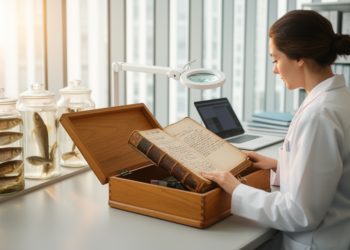
The German Ichthyological Society and partners have opened the GfI-Fischartenatlas, an openly accessible platform consolidating more than 62,000 validated fish ...

Species 2000, the UK organisation behind the Catalogue of Life, formally closed on 5 May 2026 after transferring all data ...
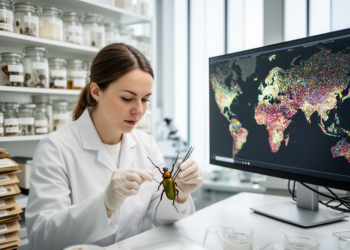
Twenty-five years ago, a handful of governments bet that the fastest route to saving life on Earth ran through something ...
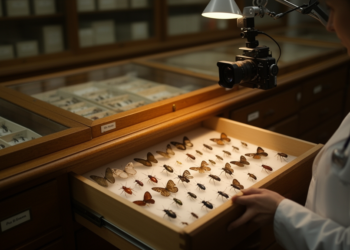
An open-source AI pipeline converts whole-drawer photographs of historical insect collections into structured, machine-readable inventory data, achieving over 98 percent ...
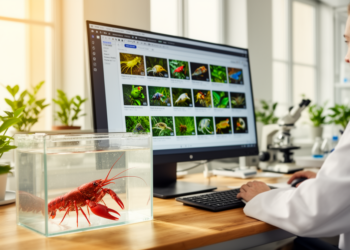
The World of Crayfish platform turns 124,318 expert-validated occurrence records into directly interpretable biogeographic knowledge through a deliberately minimal web ...


Embark on a thrilling journey of discovery with Scienmag.com—your ultimate source for cutting-edge breakthroughs. Immerse yourself in a world where curiosity knows no limits and tomorrow’s possibilities become today’s reality!