


New Mesoscale Model ACFIRE Successfully Simulates Forest Fire-Atmosphere Interactions
A new research model, ACFIRE 1.0, demonstrates the ability to simulate two-way fire-atmosphere interactions by coupling a mesoscale atmospheric model ...
A new research model, ACFIRE 1.0, demonstrates the ability to simulate two-way fire-atmosphere interactions by coupling a mesoscale atmospheric model ...

A lightweight Att-ConvGRU-UNet architecture accurately predicts atmospheric wavefront distortions with low computational complexity for satellite continuous-variable quantum key distribution.

Researchers have demonstrated a spatiotemporal topological comb that encodes 154 digital bits per wavepacket and maintains error-free recognition across simulated ...

A Zernike-parameterized forward regularizer achieves held-out forward consistency, but multi-seed controls find no detectable average restoration gain in synthetic turbulence ...

A new airborne dataset from the MAESTRO campaign provides twenty-five-hertz turbulence measurements of wind, temperature, and moisture across forty flight ...

A five-year, $19.2 million U.S. Army Research Office award will fund a UCF-led collaboration to understand and control light traveling ...

A controlled laboratory study shows that atmospheric turbulence degrades data reliability in free-space optical SLIPT links while paradoxically increasing harvested ...

A Bayesian marginalization technique promises sharper, more reliable ground-based solar images with far less manual tuning.
A five-month campaign in Bremerhaven combined three synchronized short-range lidars with mast anemometry to deliver the most detailed picture yet ...
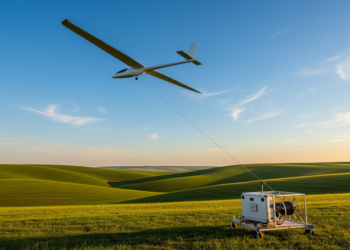
A new study shows that tethered kites built for airborne wind energy can double as turbulence sensors, measuring atmospheric parameters ...


Embark on a thrilling journey of discovery with Scienmag.com—your ultimate source for cutting-edge breakthroughs. Immerse yourself in a world where curiosity knows no limits and tomorrow’s possibilities become today’s reality!