

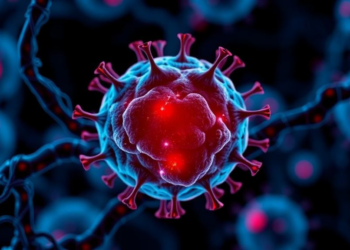
How a Cellular Stress Switch Helps Tumours Hide From the Immune System
A new review reveals how the unfolded protein response, a cellular stress-signalling network, helps tumours evade immune detection and could ...
A new review reveals how the unfolded protein response, a cellular stress-signalling network, helps tumours evade immune detection and could ...

New research shows that bacterial proteins injected into gut epithelial cells, rather than those left on the bacterial surface, program ...
A new review in Molecular Cancer explains how tumor-derived exosomes act as mobile signaling hubs that spread immune suppression, drive ...
A controlled in vitro study shows irreversible electroporation induces stronger dendritic cell activation and T cell proliferation than cryoablation or ...
A metal–organic framework nanovaccine co-delivering tumour antigens and STING agonists induced systemic tumour regression, immune memory and synergy with radiotherapy ...
New research shows that injured kidney podocytes release exosomes carrying MHC-I antigen-presenting machinery that activates CD8-positive T cells directly and, ...
Researchers at NYU Grossman School of Medicine show that loss of the NF1 tumor suppressor reorganizes melanoma tumors into immunosuppressive ...
In vivo CRISPR screens reveal that the epigenetic enzyme DNMT3A can both preserve and suppress tumor immune visibility, reshaping how ...
New research shows that T cell responses against endogenous retroviral peptides, particularly murine leukemia virus fragments, are critical for checkpoint ...
Researchers have built an open-source single-cell framework that maps injury, resolution and antigen-presentation programs in tumor myeloid cells across cancers.

Embark on a thrilling journey of discovery with Scienmag.com—your ultimate source for cutting-edge breakthroughs. Immerse yourself in a world where curiosity knows no limits and tomorrow’s possibilities become today’s reality!