


Hybrid Deep Learning Model Improves PM2.5 Forecasts in Anhui Province
A hybrid VMD-CBiLSTM model optimized by the shuffled frog-leaping algorithm achieved an average R2 of 0.981 when predicting PM2.5 concentrations ...
A hybrid VMD-CBiLSTM model optimized by the shuffled frog-leaping algorithm achieved an average R2 of 0.981 when predicting PM2.5 concentrations ...

A PyTorch-based 3DVar data assimilation system for WRF-Chem achieves a 26.2-fold speedup on GPU hardware while matching the accuracy of ...

A Scientific Reports abstract describes a hybrid decomposition and deep-learning model that reported favorable accuracy and generalization performance for hourly ...

A study using 2013–2023 data from three aggregated Tabriz monitoring stations found that boosting models performed best for short-term forecasts, ...

A new study shows that a breaking Rossby wave and a deep tropopause fold delivered ozone-rich stratospheric air into the ...

A year-long, nationwide comparison shows China's newly released EPICC-Model matching or beating CAMx and CMAQ at simulating summer ozone peaks ...
A rigorous benchmark of six machine learning families across eight Ahmedabad monitoring stations finds that a hybrid GCN-LSTM model only ...

Researchers have developed a computationally efficient parametric method that forecasts wildfire smoke uncertainty directly within an operational air quality model, ...
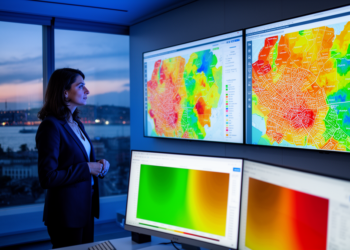
Researchers built a two-stage hybrid machine learning framework combining K-Means clustering and XGBoost that predicts Istanbul's Air Quality Index with ...

Researchers in Shanghai have developed a transfer-learning framework that denoises air quality data, optimizes a deep reservoir network, and adapts ...


Embark on a thrilling journey of discovery with Scienmag.com—your ultimate source for cutting-edge breakthroughs. Immerse yourself in a world where curiosity knows no limits and tomorrow’s possibilities become today’s reality!