

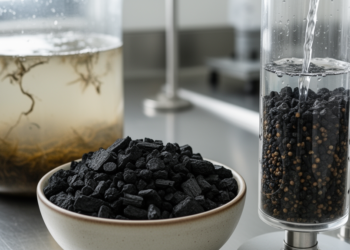
Olive mill waste biochar removes organic pollutants from wastewater
A laboratory study in Jordan found that biochar produced from olive mill solid waste removed up to 77.45% of COD ...
A laboratory study in Jordan found that biochar produced from olive mill solid waste removed up to 77.45% of COD ...

A laboratory comparison found that rice-husk biochar made at 380 °C retained more total biomass-derived carbon than biochar made at ...
A peer-reviewed review finds that differences in biomass composition and structure can shape the pore networks, chemistry, and performance of ...
Researchers found that shredded watermelon vine waste can both reinforce ecological porous concrete and neutralize its alkalinity, enabling over 80 ...
A new study in Biochar shows that manganese-modified biochar dramatically boosts white-rot fungal breakdown of wheat straw, accelerating the conversion ...
Researchers transformed sugarcane bagasse biochar using a banana peel and ash extract, achieving enhanced ammonium adsorption through surface chemistry rather ...
Researchers transformed waste corn silk into a magnetically recoverable Fe3O4 composite that removes up to nearly 99 percent of hexavalent ...
Researchers in India have created a lightweight, eco-friendly PVA composite reinforced with finger millet straw microfibers and soy hull-derived activated ...
Researchers in India have converted Vigna mungo seed skin, a waste byproduct of black gram milling, into KOH-activated porous carbon ...
Researchers grew insulation biocomposites from fungal mycelium and agricultural waste, finding that a hemp shive and Pleurotus ostreatus composite achieved ...

Embark on a thrilling journey of discovery with Scienmag.com—your ultimate source for cutting-edge breakthroughs. Immerse yourself in a world where curiosity knows no limits and tomorrow’s possibilities become today’s reality!