The transition from Industry 4.0 to Industry 5.0 marks a fundamental paradigm shift in industrial systems, moving away from efficiency-driven, technology-centric automation toward human-centric, sustainable and resilient socio-technical ecosystems. That is the central conclusion of a new systematic literature review published in Discover Sustainability, which set out to bring order to a research field that its authors describe as fragmented across engineering, artificial intelligence, sustainability science, ethics and organizational domains.
Conducted according to the PRISMA 2020 guidelines, the review applied a rigorous screening and eligibility assessment to the literature and ultimately included 177 peer-reviewed studies. The authors argue that this multidisciplinary fragmentation has limited the emergence of a unified conceptual foundation for Industry 5.0, and that a systematic synthesis is needed to integrate the diverse strands of evidence now scattered across separate research communities.
The synthesis traces the evolution of industrial paradigms from Industry 1.0 through Industry 5.0, highlighting the technological, economic and socio-political forces that have driven each successive transformation. It then develops a multidimensional comparison between Industry 4.0 and Industry 5.0 across seven transformation dimensions, emphasizing fundamental shifts in value creation logic, human–machine integration, autonomy, sustainability orientation and governance architecture.
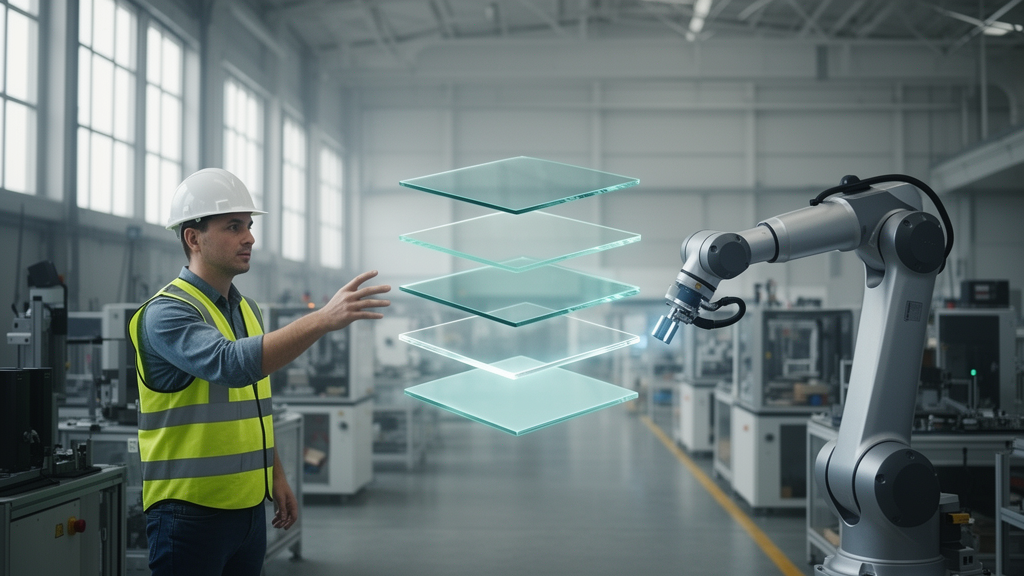
A key contribution of the review is its consolidation of enabling technologies. Collaborative robotics, explainable artificial intelligence, digital twins, cyber-physical systems, blockchain, augmented and virtual reality, and edge computing are identified as core enablers of what the authors call adaptive human–machine symbiosis, the technical foundation on which the Industry 5.0 vision of human-centred production is expected to rest.
Building on this synthesis, the study introduces a seven-layer conceptual framework that integrates foundational infrastructure, intelligence, collaboration, sustainability, resilience, governance and human-centricity. The framework is offered as a unified architecture for industrial transformation, intended to give researchers, engineers and policymakers a common reference structure for designing and evaluating next-generation industrial systems.
The review also identifies critical implementation barriers. Cybersecurity vulnerabilities, workforce reskilling constraints, ethical and transparency challenges in AI systems, and fragmented regulatory environments are singled out as the principal obstacles standing between the Industry 5.0 vision and its practical realization in factories and supply chains.
By mapping both the enabling technologies and the barriers in a single integrative analysis, the authors aim to establish a rigorous foundation for advancing theory and for guiding industrial and policy transitions toward human-centered, sustainable and resilient industrial ecosystems. The review is published open access, and the version currently available is an early-release, peer-reviewed accepted manuscript that remains subject to further editorial edits before the final Version of Record appears.
Subject of Research: A systematic literature review of human-centric, sustainable and resilient Industry 5.0 and a proposed seven-layer conceptual framework
Article Title: A systematic review of human centric sustainable and resilient Industry 5.0 with a seven layer framework
Article References: Patwary, M. O., Nirob, S. R., Islam, M. R., Abdullah-Al-Jubair, M., Islam, M. S., Ahmed, N., & Ahmed, F. (2026). A systematic review of human centric sustainable and resilient Industry 5.0 with a seven layer framework. Discover Sustainability. https://doi.org/10.1007/s43621-026-04782-6
Image Credits: AI Generated
DOI: 10.1007/s43621-026-04782-6
Keywords: Industry 5.0, Industry 4.0, systematic review, human-centric manufacturing, sustainability, resilience, digital twins, collaborative robotics, explainable AI, cybersecurity, PRISMA, governance
Cite Scienmag News
Denise Maddox. (October 28, 2026). Systematic review maps human-centric Industry 5.0 with a seven-layer framework. Scienmag. https://scienmag.com/systematic-review-maps-human-centric-industry-5-0-with-a-seven-layer-framework/
Denise Maddox. "Systematic review maps human-centric Industry 5.0 with a seven-layer framework." Scienmag, 28 October 2026, https://scienmag.com/systematic-review-maps-human-centric-industry-5-0-with-a-seven-layer-framework/. Accessed 29 October 2026.
Denise Maddox. "Systematic review maps human-centric Industry 5.0 with a seven-layer framework." Scienmag. October 28, 2026. https://scienmag.com/systematic-review-maps-human-centric-industry-5-0-with-a-seven-layer-framework/