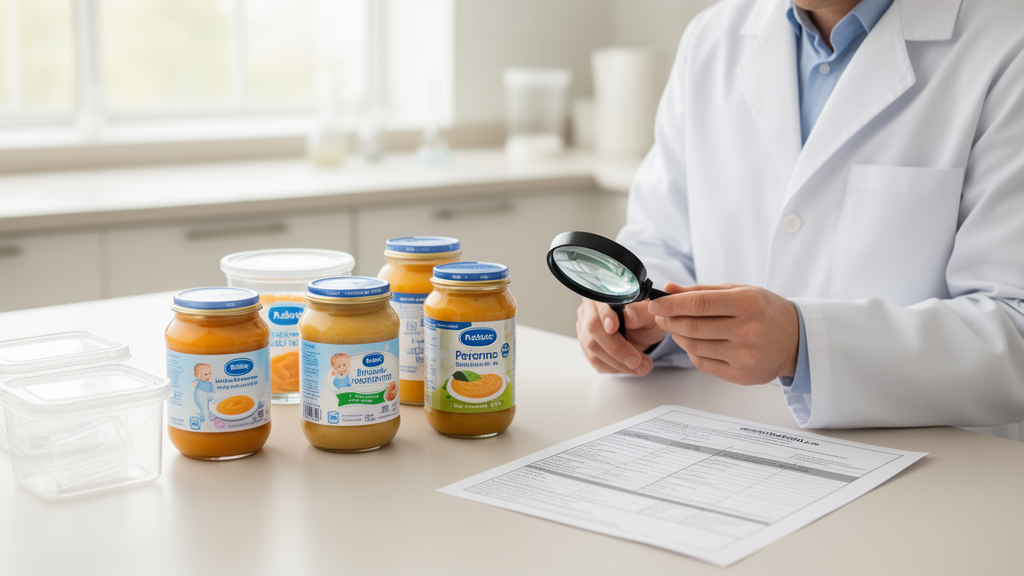
Infants may be especially vulnerable to plastic-derived contaminants in their food, including microplastics, nanoplastics and synthetic oligomers, according to a new systematic review published in npj Science of Food.
The review, led by Cairo Price and colleagues, reports that infants’ higher food intake relative to their body mass amplifies their potential exposure to these contaminants and the associated risks.
Despite this heightened vulnerability, the authors note that exposure pathways and health impacts remain poorly understood, leaving regulators constrained in their ability to evaluate risks.
The analysis is described as the first systematic review of infant dietary exposure to plastic-derived contaminants to incorporate evidence on nanoplastics and synthetic oligomers. These two contaminant classes, the authors report, make up almost half of the current research landscape, accounting for 45 percent of the field.
A central finding concerns the quality of the methods used to gather data on how these contaminants are released from plastics. The review identifies critical quality control gaps, such as insufficient blank analyses or compositional analyses, which the authors say limit the robustness of existing exposure estimates.
Without reliable exposure data, the review argues, regulators cannot properly evaluate the risks that microplastics, nanoplastics and oligomers may pose to infants through the diet.
Rather than presenting a long list of priorities, the authors outline a single priority to advance the field: adopting standardised exposure assessment approaches. Such standardisation, they argue, would improve data collection for regulatory frameworks and enable the development of effective mitigation strategies.
The review is published as an open-access article in npj Science of Food, dated 21 September 2026, and appears as a peer-reviewed, accepted manuscript shared ahead of the final version of record.
The work was carried out by researchers including Cairo Price, Dorota Bartczak, Aneta Sikora, Chris Elliott, Cuong Cao, Heidi Goenaga-Infante and Gary Hardiman.
For now, the review’s message is that the evidence base on infant dietary exposure to plastic-derived contaminants remains too weak to support confident risk assessment, and that standardised methods are the field’s most urgent need.
Subject of Research: Systematic review of plastic-derived contaminant exposure in infant food
Article Title: Evidence, implications and mitigation of plastic-derived contaminants in infant food: a systematic review
Article References: Price, C., Bartczak, D., Sikora, A., Elliott, C., Cao, C., Goenaga-Infante, H., & Hardiman, G. (2026). Evidence, implications and mitigation of plastic-derived contaminants in infant food: a systematic review. npj Science of Food. https://doi.org/10.1038/s41538-026-01153-3
Image Credits: AI Generated
DOI: 10.1038/s41538-026-01153-3
Keywords: microplastics, nanoplastics, synthetic oligomers, infant food, exposure assessment, systematic review, food safety, regulatory frameworks, risk assessment, plastic contaminants, Evidence, implications
Cite Scienmag News
Harold Sullivan. (October 28, 2026). Systematic review finds major gaps in assessing plastic contaminants in infant food. Scienmag. https://scienmag.com/systematic-review-finds-major-gaps-in-assessing-plastic-contaminants-in-infant-food/
Harold Sullivan. "Systematic review finds major gaps in assessing plastic contaminants in infant food." Scienmag, 28 October 2026, https://scienmag.com/systematic-review-finds-major-gaps-in-assessing-plastic-contaminants-in-infant-food/. Accessed 28 October 2026.
Harold Sullivan. "Systematic review finds major gaps in assessing plastic contaminants in infant food." Scienmag. October 28, 2026. https://scienmag.com/systematic-review-finds-major-gaps-in-assessing-plastic-contaminants-in-infant-food/