For more than a century, the bladder sat on the sidelines of transplantation, serving only as a bystander while kidneys, livers, hearts and pancreases changed hands between donors and recipients. That has now changed. In June 2026, Nima Nassiri and Inderbir Gill reported in The Lancet the first bladder transplantation performed in a living human, carried out at the University of California, Los Angeles and the University of Southern California as a combined vascularized composite bladder allograft and kidney transplant within a prospective first-in-human feasibility trial. Writing in a commentary in Transplant International, transplant surgeon Emilien Seizilles de Mazancourt and Oriol Bestard congratulate the team and place the result in its scientific context: it did not come out of nowhere, but followed a deliberate, stepwise programme that moved from cadaveric feasibility work to porcine models, perfused human cadavers and robotic bladder auto-transplantation in heart-beating brain-dead research donors, with each step published and open to scrutiny.
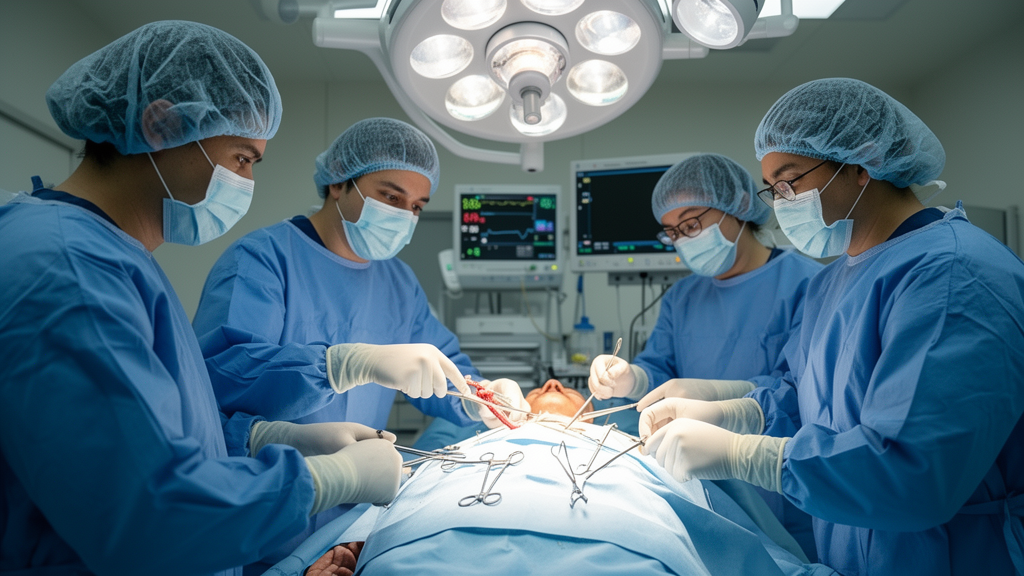
The recipient was a 41-year-old man on peritoneal dialysis who had undergone bilateral nephrectomy for bilateral, low-risk clear-cell renal cell carcinoma treated more than five years earlier, and a partial cystectomy for urachal adenocarcinoma. Pretransplant urodynamics showed a small-capacity bladder with storage pressures above 40 cmH2O and vesicoureteral reflux. During procurement, the donor bladder’s capacity and compliance were checked by gravity filling with 350 mL of saline, with intraluminal pressure staying below 30 cmH2O, and a back-table cystoscopy excluded mucosal abnormalities. The vascularized composite bladder allograft was based on both internal iliac pedicles, conjoined into a single arterial and a single venous channel, an arrangement the commentary likens to the Y-graft reconstruction familiar to pancreas transplant surgeons. In the recipient, the cystectomy was completed while preserving the bladder neck and a rim of trigone, the transplant ureter was reimplanted into the allograft bladder, a suprapubic catheter was left in place, and the whole procedure took about eight hours.
The postoperative course was not uneventful. On day 25, an intraperitoneal urine leak from the suprapubic tube tract, with wound breakdown, required reoperation and was classified as Clavien–Dindo grade IV. The commentary’s authors argue that this complication does not call into question the technical feasibility of the procedure, since urinary leaks are a recognized complication of any bladder or ureterovesical reconstruction, but it remains relevant to the assessment of safety and should inform the refinement of perioperative management, notably urinary drainage and wound care, in recipients who often have a previously operated abdomen and pelvis. At six months, kidney function was stable, with a glomerular filtration rate of 52 to 55 mL/min per 1.73 m2. Protocol biopsies of the bladder allograft at days 35, 100 and 180 showed no cellular or antibody-mediated rejection, and donor-derived cell-free DNA stayed at very low levels, reaching 0.04 percent at six months.
The most striking result is function. The trial’s primary endpoint was technical feasibility, and functional success was modestly defined as the ability to store more than 200 mL, with candidates required to be able to self-catheterize because the allograft was expected to behave as a denervated reservoir. Instead, at six months the patient had intact bladder sensation, a capacity of 600 mL with normal compliance and no detrusor overactivity, and he voided to completion with a maximum flow rate of 17 mL/s, negligible post-void residuals and full continence. The authors candidly acknowledge that they did not expect spontaneous voiding. They propose intrinsic myogenic activity, local stretch responses, abdominal straining and a trigonal contribution as plausible but unproven explanations. Whether this is reproducible is now the central question, and the first information on subsequent recipients calls for caution.
According to an institutional report from UCLA Health dated 23 June 2026, which has not been peer reviewed, two further patients have since received a combined transplant: in one, the bladder allograft had to be removed after a complication while the kidney graft continued to function; the other was voiding without a catheter almost two months after surgery. The commentary stresses that these preliminary observations must be distinguished from the peer-reviewed data, and that a single peer-reviewed case cannot establish efficacy. The subsequent recipients, followed with rigorous urodynamic, immunological and histological monitoring, will show whether the unexpected return of voiding is the rule or the exception, and how often graft-related complications occur.
The clinical problem the procedure targets is real and long-neglected. For a small but particularly challenging group of patients with severe lower urinary tract dysfunction or an absent bladder, providing a safe and durable urinary reservoir remains a major and often underappreciated source of morbidity and progressive graft dysfunction. The current standard for patients with an end-stage bladder is reconstruction with intestine, through augmentation enterocystoplasty, a continent reservoir or a non-continent ileal conduit. These procedures work, but their costs are well known: hyperchloraemic metabolic acidosis, vitamin B12 deficiency and bone loss, mucus production, stones, chronic bacteriuria and recurrent infection, anastomotic strictures and a lifelong need for surveillance. In kidney transplant recipients, colonized bowel segments combined with immunosuppression add a further layer of infectious risk to the graft.
Tissue engineering once seemed to offer a way out. Atala and colleagues reported in 2006 autologous urothelial and smooth-muscle cells seeded on a collagen scaffold for augmentation cystoplasty in seven children with myelomeningocele; omental wrapping improved results, compliance and capacity increased, and there was no mucus production. However, a phase II study using a similar approach failed to reproduce these results and reported serious adverse events. The limitations are now better understood: insufficient neovascularisation, fibrosis and graft shrinkage, and the toxicity of urine for an unprotected regenerating wall. Bladder organoids and assembloids are a remarkable tool for studying regeneration and cancer, but they remain far from a full-thickness, vascularized and compliant reservoir. This is the core argument for a vascularized allograft: it brings its own blood supply and its own mature urothelial barrier. Conversely, the transplanted bladder provides a valuable biological reference for regenerative approaches, because serial analysis of its extracellular matrix, smooth-muscle organization and fibrosis could help define the structural targets that bioengineered constructs need to reproduce.
The most common objection is that bladder transplantation simply trades the morbidity of intestinal segments for lifelong immunosuppression. That is true for an isolated bladder transplant, but much less true for a combined kidney–bladder transplant, where immunosuppression is required anyway for the kidney, the same reasoning that justified simultaneous pancreas-kidney transplantation decades ago. In the reported case, no particularly intensive regimen appears to have been needed to protect the bladder allograft, although an existing indication for immunosuppression does not exclude graft-related risks: the bladder allograft can itself be rejected, adds its own surgical morbidity, and may fail and require removal, as illustrated by one of the subsequent cases. There is also indirect precedent regarding immunogenicity: every kidney transplant already carries donor urothelium in the renal pelvis and ureter, and donor bladder tissue has been transplanted for years in en bloc pediatric kidney transplantation using a bladder patch, managed with standard kidney transplant immunosuppression. These observations are reassuring, but they do not establish the immunogenicity of a complete vascularized bladder allograft, which contains a far larger mass of detrusor, vessels and connective tissue than a ureter or a bladder patch.
Oncology is another boundary. Urothelial carcinoma is by far the leading indication for cystectomy, but Nassiri and Gill made clear in a reply to a letter about their brain-dead autotransplantation model that the target population is not bladder cancer but primarily neurogenic and other non-oncological end-stage bladders. The UCLA/USC protocol excludes donors with a history of urothelial or prostate malignancy, although recipients with a remote, low-risk oncological history are not excluded outright, as the first patient illustrates. Patient selection will largely determine success: a small bladder in a dialysis patient is not necessarily an end-stage bladder, since urodynamic studies have shown that defunctionalised, hypocompliant bladders can recover capacity and compliance once diuresis is restored by a kidney graft, and pretransplant bladder cycling can help separate reversible defunctionalisation from fixed neurogenic or fibrotic disease. The patients who stand to gain most are those in whom end-stage renal disease and end-stage bladder coexist, often because lower urinary tract dysfunction caused the renal failure in the first place.
Looking ahead, the commentary argues that each of these rare cases should be studied as deeply as possible, with multimodal phenotyping including histology, transcriptomics, spatial and single-cell approaches and circulating biomarkers. The bladder lends itself to this: it can be biopsied by cystoscopy with little morbidity, and it is continuously bathed in urine, making urinary donor-derived cell-free DNA and urinary transcriptomic signatures natural companions to the plasma assay used in this trial. In a combined kidney–bladder transplant, the easily accessible bladder could even serve as a sentinel for kidney rejection. Repeated urodynamics with detrusor pressure recordings and sphincter electromyography should help determine whether true detrusor contractions and reinnervation occur, or whether voiding relies on other mechanisms; until reinnervation is directly demonstrated, spontaneous voiding should be regarded as a functional observation rather than evidence of reinnervation. On the basis of current evidence, potential candidates include patients with end-stage renal disease and an end-stage bladder, kidney transplant recipients already on immunosuppression who develop a terminal bladder, and patients with severe neurogenic bladder, chronic inflammatory bladder disease or refractory recurrent infections who are not suitable for, or have failed, intestinal reconstruction. After more than a century on the sidelines, the bladder has finally had its turn.
Subject of Research: First-in-human combined bladder and kidney transplantation and its clinical implications
Article Title: The bladder’s turn: first-in-human combined bladder–kidney transplantation
Article References: Seizilles de Mazancourt, E., & Bestard, O. (2026). The bladder’s turn: first-in-human combined bladder–kidney transplantation. Transplant International, 39, Article 17955. https://doi.org/10.3389/ti.2026.17955
Image Credits: AI Generated
Keywords: bladder transplantation, kidney transplantation, vascularized composite allograft, first-in-human trial, neurogenic bladder, urinary reconstruction, organ transplantation, transplant immunosuppression, urodynamics, tissue engineering, surgical innovation, Transplant International
Cite Scienmag News
Ophelia Keating. (October 28, 2026). Surgeons transplant a bladder and kidney together for the first time. Scienmag. https://scienmag.com/surgeons-transplant-a-bladder-and-kidney-together-for-the-first-time/
Ophelia Keating. "Surgeons transplant a bladder and kidney together for the first time." Scienmag, 28 October 2026, https://scienmag.com/surgeons-transplant-a-bladder-and-kidney-together-for-the-first-time/. Accessed 29 October 2026.
Ophelia Keating. "Surgeons transplant a bladder and kidney together for the first time." Scienmag. October 28, 2026. https://scienmag.com/surgeons-transplant-a-bladder-and-kidney-together-for-the-first-time/