


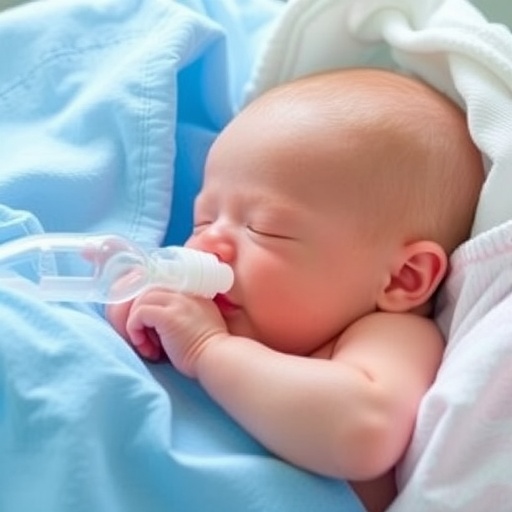
In a groundbreaking study poised to influence neonatal care, researchers have unveiled crucial insights into how surfactant therapy, mechanical ventilation, and the presence of patent ductus arteriosus (PDA) impact oxygenation in the lungs and brain of preterm infants. Utilizing the innovative technology of near-infrared spectroscopy (NIRS), this research offers a new window into regional oxygen dynamics, potentially revolutionizing how clinicians approach respiratory support and cardiovascular management in the most vulnerable neonatal populations.
Premature infants often face dire respiratory challenges due to underdeveloped lungs and compromised circulatory systems. Surfactant therapy has been a cornerstone in managing respiratory distress syndrome, helping to reduce surface tension in the alveoli and enhancing gas exchange. However, despite its widespread use, the nuanced effects of surfactant administration on regional oxygenation—particularly in the delicate cerebral and pulmonary tissues—have remained elusive. This study addresses that knowledge gap with precise, real-time monitoring that helps delineate the interplay of therapeutic interventions and physiological responses.
Employing near-infrared spectroscopy, a technique that leverages the differential absorption properties of oxygenated and deoxygenated hemoglobin, researchers were able to non-invasively monitor oxygen saturation levels within the pulmonary and cerebral vasculature of preterm infants. This method surpasses traditional pulse oximetry by providing localized oxygenation profiles in critical regions, thereby offering clinicians a more detailed map of oxygen delivery and utilization during therapy.
The study meticulously tracked oxygenation changes following surfactant administration and during mechanical ventilation, highlighting how each intervention distinctively influences regional oxygen dynamics. Post-surfactant therapy, the pulmonary regions exhibited marked improvements in oxygen saturation, underscoring the efficacy of surfactant in enhancing alveolar function. Meanwhile, cerebral oxygenation displayed varied responses, influenced by the complex interplay between improved lung function and systemic hemodynamics.
Mechanical ventilation, indispensable for infants with compromised respiratory drive or lung mechanics, introduces its own set of physiological alterations. The study found that ventilation parameters must be finely tuned to optimize oxygen delivery without exacerbating pulmonary injury or cerebral hypoxia. NIRS data revealed that inappropriate ventilation settings could inadvertently reduce cerebral oxygenation despite improving pulmonary parameters, illuminating the delicate balance clinicians must achieve.
A compelling aspect of the research centers on the patent ductus arteriosus, a fetal vascular shunt that may remain open in preterm infants, often complicating oxygenation and systemic blood flow. The persistence of PDA was found to significantly modulate regional oxygenation, frequently diminishing pulmonary oxygen saturation while variably affecting cerebral oxygen levels. This finding reiterates the importance of early detection and judicious management of PDA to prevent secondary hypoxic injury.
Moreover, the investigators delineated how the combined presence of PDA and the necessity for ventilation therapy imposes a compounded challenge. Infants requiring both interventions exhibited more pronounced fluctuations in cerebral and pulmonary oxygenation, suggesting additive or synergistic effects that underscore the need for integrated therapeutic approaches.
Beyond immediate clinical implications, this study emphasizes the transformative potential of NIRS technology in neonatal intensive care units (NICUs). By providing continuous, non-invasive data on regional oxygen saturation, NIRS can serve as a real-time feedback tool guiding personalized respiratory and cardiovascular management, potentially improving outcomes and reducing complications associated with hypoxia or hyperoxia.
Importantly, this research addresses a longstanding controversy regarding the optimal timing and sequence of surfactant administration relative to ventilation strategies. The observed oxygenation patterns suggest that surfactant therapy, when coupled with carefully moderated ventilation, can maximize pulmonary oxygen delivery while safeguarding cerebral oxygenation, a balance crucial for neurodevelopmental outcomes.
The extensive dataset generated also paves the way for predictive modeling of oxygenation trends in preterm infants, presenting opportunities for developing algorithms that can preemptively alert healthcare providers to deleterious oxygenation shifts. This proactive approach could dramatically shift the paradigm from reactive to preventive neonatal care.
Furthermore, the study contributes to the growing body of evidence supporting individualized treatment strategies. Given the variability in oxygenation responses among infants with similar clinical profiles, this research advocates for tailoring interventions based on real-time monitoring rather than relying solely on standard protocols.
Through meticulous analysis, the research team also highlighted potential biomarkers within the NIRS signals that could indicate early signs of cerebral hypoxia or oxidative stress, fostering avenues for adjunctive therapies aimed at neuroprotection.
This work, therefore, not only elucidates the physiological consequences of key neonatal interventions but also informs the technological and therapeutic innovations necessary to optimize survival and quality of life for preterm infants. It aligns with the broader goals of precision medicine and underscores the vital role of cutting-edge sensing technologies in achieving them.
The implications of this research resonate beyond neonatal care, as improved understanding of oxygenation dynamics in fragile populations may translate to better management strategies in other critical care settings, such as adult respiratory distress or cardiac surgery.
In conclusion, the integration of near-infrared spectroscopy into neonatal care provides an unprecedented lens through which to assess and refine treatment modalities for preterm infants. By revealing how surfactant therapy, ventilation, and patent ductus arteriosus interact to shape regional pulmonary and cerebral oxygenation, this study charts a promising course toward more precise, effective, and less invasive interventions that could transform neonatal outcomes worldwide.
Cite Scienmag News
Harold Sullivan. (March 16, 2026). Surfactant, Ventilation, PDA Impact Oxygenation in Preterms. Scienmag. https://scienmag.com/surfactant-ventilation-pda-impact-oxygenation-in-preterms/
Harold Sullivan. "Surfactant, Ventilation, PDA Impact Oxygenation in Preterms." Scienmag, 16 March 2026, https://scienmag.com/surfactant-ventilation-pda-impact-oxygenation-in-preterms/. Accessed 3 September 2026.
Harold Sullivan. "Surfactant, Ventilation, PDA Impact Oxygenation in Preterms." Scienmag. March 16, 2026. https://scienmag.com/surfactant-ventilation-pda-impact-oxygenation-in-preterms/


