


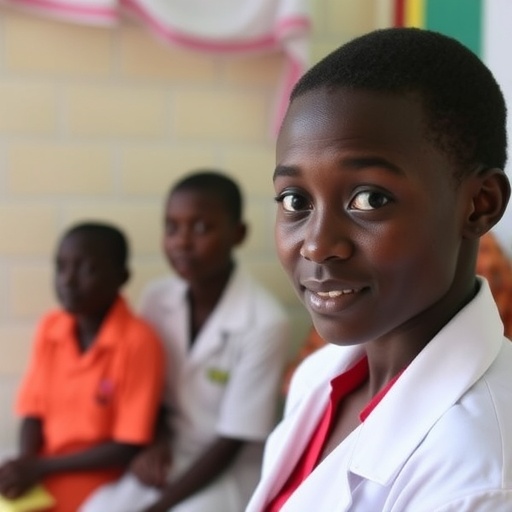
The ongoing armed conflict in Sudan has significantly disrupted many sectors, none more critically than healthcare and education. In a groundbreaking cross-sectional survey conducted by a team of researchers led by Altayeb, L., together with Elseddig, M.K., Saeed, A., the researchers delve into the ramifications of this conflict specifically on pharmacy education. The study not only elucidates the challenges faced by institutions during a crisis but also portrays the innovative responses employed to adapt to the tumultuous environment.
The scale and intensity of armed conflicts often leave a trail of devastation that infiltrates various layers of society, shaking the foundations of educational systems, particularly in regions already struggling with limited resources. This survey provides an intimate glimpse into how students and educators navigate a landscape fraught with violence and instability, reflecting on both the immediate and long-term impacts on pharmacy education. The results underscore a pressing need for effective strategies to maintain educational integrity amidst adversity.
Participants in the study included pharmacy students, educators, and administrators from various institutions across Sudan, creating a comprehensive dataset that highlights the diverse responses to the challenges presented by the ongoing conflict. Respondents detailed their experiences, capturing the essence of resilience as they continue to strive for educational continuity under the most challenging conditions. The insights gained from the survey paint a vivid picture of the realities faced by those involved in pharmacy education during these trying times.
Key issues documented in the survey reveal that many pharmacy programs have adapted by integrating remote learning technologies. However, access to the internet and resources varies widely, leading to unequal opportunities among students. The survey illustrates how institutions have embraced online platforms to mitigate disruptions; however, logistical and infrastructural barriers complicate the implementation of these solutions. Educators have had to innovate rapidly, demonstrating remarkable adaptability as they embraced technology to reach their students.
Furthermore, the study highlights the psychological toll that armed conflicts impose on aspiring pharmacists. Many students are grappling with mental health challenges due to the stress and upheaval caused by the violence surrounding them. The emotional impact of witnessing and experiencing conflict has added layers of complexity to their education, often compromising their focus and performance. Respondents suggested that mental health support systems within academic institutions are sorely lacking, indicating a need for immediate action to address these pressing issues.
Despite the obstacles, the resilience of the Sudanese educational system is apparent. The institutional responses noted in the survey illustrate a commitment to preserving the core objectives of pharmacy education. Many institutions have formed collaborations with local and international organizations to access resources and training opportunities, demonstrating that unity can triumph over adversity. The adaptability of educators and students alike showcases a remarkable spirit of perseverance, emphasizing their unwavering dedication to the field of pharmacy.
The study also examines the role of government and policy frameworks in shaping responses to the crisis. Policymakers have faced immense pressure to ensure that education remains a priority, even during periods of conflict. This has inspired advocacy for better funding and support mechanisms for education in conflict zones. The survey argues for the importance of developing resilient educational policies that not only address immediate crises but also lay the groundwork for long-term recovery and growth.
Moreover, the research calls for a global response to help address the educational deficits created by conflict. The international community has a pivotal role to play in aiding the transformation of pharmacy education in Sudan. Well-structured initiatives can bring much-needed resources, create scholarship opportunities, and enhance collaborative research initiatives that pave the way for revitalization in the sector. Education should be a fundamental right, and collective efforts can help bridge the gaps that arise in times of turmoil.
As the survey concludes, it leaves us with powerful reflections on the importance of adaptability in education systems. While the immediate future may seem uncertain due to the ongoing conflicts, the findings echo a resounding message: education must persist. The commitment to fostering a new generation of pharmacists, even amidst chaos, is a testament to the indomitable spirit of the educators and students engaged in this vital field.
Through these reflections, Altayeb et al. not only narrate a powerful story of struggle and survival but also inspire a call to action. As we contemplate the future of pharmacy education in conflict-affected areas, it becomes critical to engage with the insights provided by those directly experiencing these challenges. The lessons learned from Sudan can illuminate pathways for resilience in education across similar contexts worldwide.
In conclusion, the transformative power of education, even in the face of armed conflict, cannot be overlooked. As we acknowledge the struggles faced in Sudan, let us combine our efforts to support the ongoing education initiatives, ensuring that pharmacy students can continue their essential journey toward becoming healthcare professionals—even when the world around them appears to be crumbling.
Through this extensive examination, the researchers illuminate not just the challenges but also the potential for growth and innovation within pharmacy education under crisis conditions. The collective wisdom gathered from students, educators, and institutions during this survey serves as a rallying point for those committed to the cause of education amid adversity. With the right support, the future of pharmacy education in Sudan can be bright, resilient, and capable of producing healthcare professionals prepared to face the challenges of tomorrow.
Altayeb, L., Elseddig, M.K., Saeed, A. et al. Impact of Sudan’s armed conflict on pharmacy education and the institutional response amidst the crisis: a cross-sectional survey.
Discov Educ (2026). https://doi.org/10.1007/s44217-026-01108-6
Cite Scienmag News
Courtney Benton. (January 17, 2026). Sudan Conflict’s Toll on Pharmacy Education: Crisis Response. Scienmag. https://scienmag.com/sudan-conflicts-toll-on-pharmacy-education-crisis-response/
Courtney Benton. "Sudan Conflict’s Toll on Pharmacy Education: Crisis Response." Scienmag, 17 January 2026, https://scienmag.com/sudan-conflicts-toll-on-pharmacy-education-crisis-response/. Accessed 6 September 2026.
Courtney Benton. "Sudan Conflict’s Toll on Pharmacy Education: Crisis Response." Scienmag. January 17, 2026. https://scienmag.com/sudan-conflicts-toll-on-pharmacy-education-crisis-response/


