

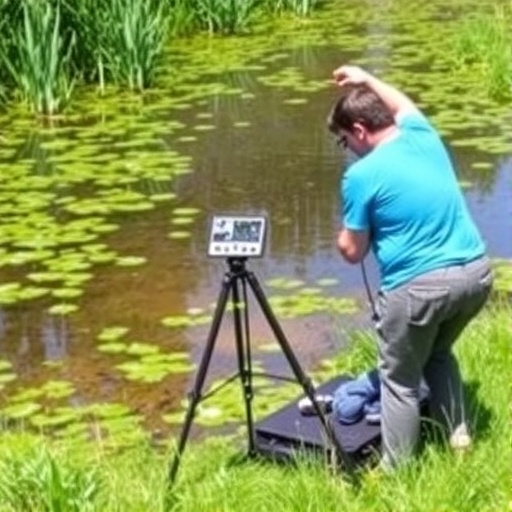
In the intricate web of forest ecosystems, the implications of pesticide application are of utmost concern. A recent study sheds light on the off-target movement of tebufenozide, a widely used insect growth regulator, emphasizing its potential impact on vernal pond ecosystems. This study touches on critical issues surrounding environmental safety and wildlife conservation, areas that are increasingly coming under scrutiny as agricultural practices evolve and intensify. The research, conducted by a team led by M.S. Ward and published in Environmental Monitoring and Assessment, highlights the need for a more nuanced understanding of pesticide dispersion in natural environments.
Tebufenozide, known for its efficacy in controlling pest populations, has been hailed as a relatively low-toxicity alternative to traditional insecticides. However, what remains less understood is the extent to which this compound can migrate from the initial application site, thereby posing risks to non-target organisms and sensitive habitats. The study employs sophisticated methodologies to quantify tebufenozide movement, aiming to illuminate the broader ecological ramifications that arise from its use in forested landscapes.
The research employs a combination of field monitoring and advanced modeling techniques to track tebufenozide’s dispersion patterns within a controlled forest setting. By establishing monitoring sites near vernal ponds, the team could gauge how far the pesticide traveled from its point of application, analyzing both the concentration levels and the implications for aquatic life. Such ponds are crucial for many amphibians and other wildlife that depend on these ephemeral water bodies for reproduction and survival.
One significant finding highlighted by the researchers is that tebufenozide can indeed move beyond its intended bounds, affecting areas that are critical for biodiversity. This movement can alter the delicate balance of these ecosystems, potentially resulting in aquatic toxicity, reproductive failures in amphibians, and a decline in the overall health of the ponds. The study raises pertinent questions regarding regulatory measures currently in place and whether they adequately address the potential for these adverse outcomes.
The work also indicates land-use practices as a pivotal factor in determining the movement patterns of tebufenozide. Particular attention is drawn to the role of terrain, vegetation cover, and rainfall, which seem to influence how much pesticide reaches the sensitive aquatic systems. This finding is particularly alarming as it suggests that certain conditions can amplify the risk, meaning varying landscapes can lead to exponentially different outcomes when pesticides are applied.
Moreover, the research emphasizes the importance of continuous monitoring post-application. The temporal aspect of pesticide movement is essential for understanding its long-term ecological impacts. By advocating for prolonged observation periods, the study seeks to establish a baseline for future assessments, which could empower policymakers to create more informed regulations regarding pesticide application in vulnerable areas.
In addressing potential mitigation strategies, the authors advocate for the incorporation of buffer zones around vernal ponds. Such measures would provide natural barriers that could greatly reduce the risk of pesticide exposure to these critical habitats. Alongside governmental regulations, educating farmers and stakeholders about the environmental costs of unrestricted pesticide use is vital for fostering a culture of responsible application.
An important aspect of the study is its call for interdisciplinary collaboration. The researchers emphasize that ecological assessments cannot be conducted in isolation from agricultural practices. Bridging the gap between pest management and environmental science is crucial for developing sustainable methods that protect both agricultural yields and biodiversity.
The implications of this research extend beyond local impacts. As climate change alters weather patterns and, consequently, the behavior of both pests and pesticides, the findings highlight the urgency in reevaluating current practices. Warmer temperatures and varying precipitation levels could change how tebufenozide behaves in the environment, necessitating ongoing research and rapid adaptation of best practices in pesticide management.
Ultimately, the research serves as a powerful reminder of our responsibility towards maintaining ecological integrity. With rising concerns over biodiversity loss and ecosystem degradation, this study underscores the importance of using science to guide policy decisions. It lays a clear pathway for aligning agricultural practices with environmental stewardship, ensuring that we can continue to produce food without compromising the health of our natural ecosystems.
As we face the ongoing challenges posed by agricultural intensification and climate change, more comprehensive studies like this one are essential. They force us to confront the delicate balance between human necessity and ecological reality. The findings concerning tebufenozide should prompt robust discussions, leading to proactive measures that safeguard our planet’s invaluable ecosystems, particularly in the midst of extensive forested areas rich with natural life.
In summary, this research not only identifies significant gaps in our understanding of pesticide behavior in forested ecosystems but also proposes actionable steps forward. As we glean critical insights, it becomes increasingly apparent that while pesticides like tebufenozide may offer agricultural benefits, we must remain vigilant about the potential ecological costs that accompany their use. Moving forward, it is imperative that we integrate this knowledge into our agricultural practices and environmental policymaking frameworks, ensuring that both food security and biodiversity conservation can coexist in harmony.
Subject of Research: Off-target movement of tebufenozide in forested ecosystems.
Article Title: Assessing the off-target movement of tebufenozide in forested ecosystems: implications for vernal pond ecosystems.
Article References:
Ward, M.S., Nyoni, H., Mina, O. et al. Assessing the off-target movement of tebufenozide in forested ecosystems: implications for vernal pond ecosystems.
Environ Monit Assess 198, 82 (2026). https://doi.org/10.1007/s10661-025-14908-4
Image Credits: AI Generated
DOI: https://doi.org/10.1007/s10661-025-14908-4
Keywords: tebufenozide, off-target movement, environmental impact, biodiversity, vernal ponds, forest ecosystems, pesticide regulation, ecological health.


