


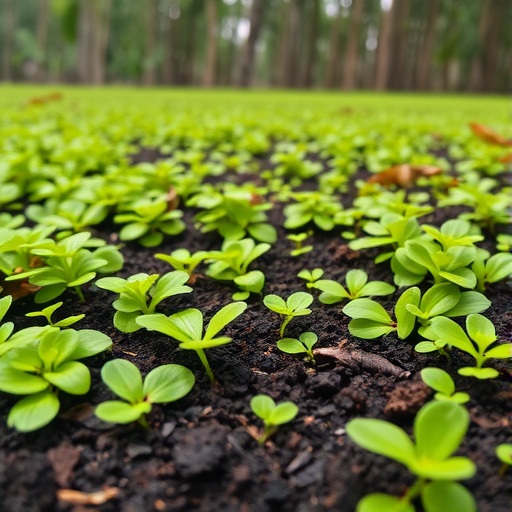
In a groundbreaking study, researchers have unveiled the intricate and often overlooked role of soil green algae within rubber plantations, emphasizing their significance as a biological component crucial for environmental monitoring and assessment. This analysis, conducted by Joseph and Ray, sheds light on the interplay between these microorganisms and the overall health of the ecosystem, proposing important insights for sustainable agricultural practices.
The findings present a compelling case for the inclusion of soil green algae in environmental assessments. Often seen as simple organisms, these algae contribute significantly to soil structure and nutrient cycling. They play a vital role in maintaining soil fertility, which is particularly crucial in rubber plantations where monoculture practices can lead to soil degradation. Understanding the ecological niches that these green algae occupy could pave the way for enhanced agricultural practices that leverage natural biological processes.
The study meticulously examined various rubber plantation sites, revealing a diverse array of soil green algae species. This diversity is essential for the resilience of soil ecosystems, demonstrating that a rich microbial community can enhance soil health and mitigate some of the adverse effects of monoculture. In ecosystems where rubber trees are grown extensively, the soil’s biological diversity, particularly the presence of green algae, can significantly influence the overall ecological balance.
One of the critical insights from the research is the relationship between rubber plantations and nutrient cycling. Soil green algae are adept at photosynthesis, converting sunlight into energy and fixing carbon dioxide. This process not only contributes to the overall carbon balance but also supports other soil organisms, creating a thriving ecosystem beneath the surface. This finding challenges conventional agricultural practices that often neglect the importance of maintaining biodiversity, urging stakeholders to consider the ecological implications of their farming methods.
Furthermore, the study highlights the role of these microorganisms in bioremediation. Pollution and nutrient runoff are rampant issues in agricultural landscapes, and soil green algae have shown potential in bioremediation efforts by absorbing excess nutrients and pollutants. Their ability to thrive in varied conditions suggests that they could serve as bioindicators for soil health, offering a practical way to monitor environmental quality in rubber plantations and beyond.
The implications of this research extend far beyond the scientific community, reaching policymakers and agricultural stakeholders. With the growing concerns regarding food security and climate change, the necessity of sustainable agricultural practices is becoming increasingly urgent. By integrating efforts to sustain soil health through the use of soil green algae, agricultural practices can be made more robust against the challenges posed by environmental changes.
Moreover, the analysis underscores a vital shift towards understanding agriculture within an ecological context. Emphasizing the interconnectedness of various soil components, this study encourages a more holistic approach to farming, wherein every organism, no matter how small, has a role to play in the ecosystem’s stability. Recognizing the importance of soil green algae can lead to better soil management strategies that prioritize biodiversity over monoculture.
As agriculture continues to evolve, the insights gleaned from this critical analysis prompt further research into the ecological dynamics at play in rubber plantations. Encouraging deeper investigations into soil biodiversity will not only enrich scientific understanding but also enhance the efficacy of agricultural practices. The time has come for the agricultural sector to embrace these findings, ensuring that soil health is prioritized to support future generations.
This research represents a call to action. As global populations rise, the pressure on agricultural landscapes intensifies. Understanding and incorporating the ecological functions of soil green algae is just one piece of the puzzle that can lead to more resilient agricultural systems. By fostering a greater understanding of these microorganisms, stakeholders can develop strategies that improve sustainability and ecological health.
In conclusion, the work by Joseph and Ray provides not only a critical analysis of soil green algae but also a powerful narrative on the future of agriculture in a rapidly changing world. As they advocate for the recognition of these organisms as pivotal to soil health, their research lays the groundwork for a transformative approach to environmental monitoring and agricultural assessment. Therefore, it is essential to expand our knowledge of soil ecosystems and reassess conventional farming practices to foster a more sustainable future.
To summarize, the role of soil green algae within rubber plantations cannot be overstated. These microorganisms are indispensable for maintaining soil health and promoting biodiversity, which are crucial for sustainable agriculture. As we face unprecedented environmental challenges, embracing the ecological value of every organism in the soil could lead to a new paradigm in agricultural practices.
Joseph, J., Ray, J.G. Critical analysis of ecology and diversity of soil green algae of rubber plantations as a crucial biological component in soils for environmental monitoring and assessment.
Environ Monit Assess 197, 1087 (2025). https://doi.org/10.1007/s10661-025-14555-9
Cite Scienmag News
Alan Morgan. (September 5, 2025). Studying Soil Green Algae in Rubber Plantations. Scienmag. https://scienmag.com/studying-soil-green-algae-in-rubber-plantations/
Alan Morgan. "Studying Soil Green Algae in Rubber Plantations." Scienmag, 5 September 2025, https://scienmag.com/studying-soil-green-algae-in-rubber-plantations/. Accessed 3 September 2026.
Alan Morgan. "Studying Soil Green Algae in Rubber Plantations." Scienmag. September 5, 2025. https://scienmag.com/studying-soil-green-algae-in-rubber-plantations/


