

Thursday, September 3, 2026
Science
No Result
View All Result
  • Login
  • HOME
  • SCIENCE NEWS
  • CONTACT US
  • HOME
  • SCIENCE NEWS
  • CONTACT US
No Result
View All Result
Scienmag
No Result
View All Result
Home Science News Medicine

Study shows experience reorganizes content-specific memory traces in macaques

July 29, 2026
in Medicine
Cassandra Pierce
By Cassandra Pierce Scienmag Editorial Profile - Systems Neuroscience
Reading Time: 2 mins read
0
Study shows experience reorganizes content-specific memory traces in macaques

Study shows experience reorganizes content-specific memory traces in macaques

65
SHARES
587
VIEWS
Share on FacebookShare on Twitter
ADVERTISEMENT

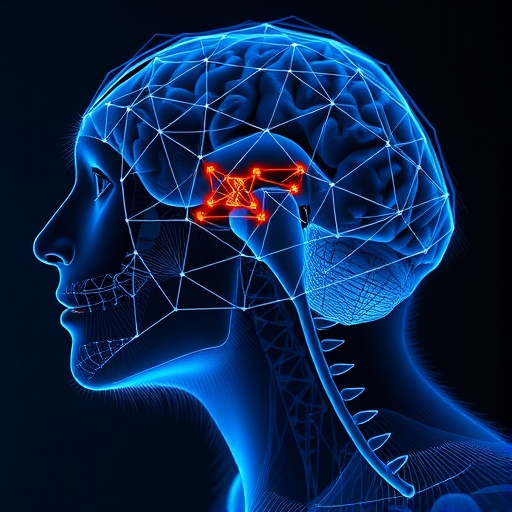
A new study in macaques suggests that how memory traces are reorganized by experience is reflected not only in synaptic networks but also in the physiological “fingerprints” of the neurons that participate. The researchers report that key assembly-level features—such as which neurons belong exclusively to particular assemblies, how connected those assemblies are, and how sharp-wave ripples (SWRs) modulate network activity—can be shaped by differences in the cell types contributing to each assembly.

To probe this idea, the team analyzed neurons classified by their membership history: cells belonging exclusively to newly formed, recent, or older assemblies. Neurons with divided memberships were handled separately, ensuring that comparisons reflected genuine differences in assembly participation rather than mixed recruitment across time windows.

They then measured four physiological features that can differentiate inhibitory and excitatory neurons in vivo: global firing rate, burst index, waveform trough-to-peak duration (a measure related to spike shape and width), and interspike interval (ISI) distributions. This approach leverages known electrophysiological signatures—such as the expectation that inhibitory basket cells typically show higher firing rates, stronger spike narrowness, lower bursting, and shorter ISIs compared with pyramidal neurons.

Surprisingly, firing rates and burst indices did not significantly differ among the assembly groups, suggesting that overall activity level and burst propensity were not the main drivers of assembly-specific network behavior. Instead, spike morphology and timing carried the strongest signal. The spike width metric indicated narrower spikes for neurons in the recent and old groups relative to those in the new group, pointing to systematic changes in waveform characteristics as assemblies age.

In parallel, the ISI analysis revealed longer interspike intervals for neurons in the new group compared with those in recent or old assemblies. The authors report statistical support for this effect (permutation testing with false discovery rate correction; P < 0.01), reinforcing that temporal firing structure—not merely how often neurons fire—is reorganized during experience-dependent memory trace updating.

Together, these findings suggest a cell-type-sensitive mechanism underlying assembly exclusivity and connectivity dynamics. As experience reshapes memory content, the physiological regime of recruited neurons—especially spike width and ISI timing—may shift in a way that supports stable yet adaptable network representations.

Subject of Research: Experience-dependent memory trace reorganization in macaques (hippocampal-like assemblies and SWR modulation)

Article Title: Experience reorganizes content-specific memory traces in macaques.

Article References: Abbaspoor, S., Aljishi, A., & Hoffman, K. L. (2026). Experience reorganizes content-specific memory traces in macaques. Nature Neuroscience, 29(8), 1976-1986. https://doi.org/10.1038/s41593-026-02357-2

Image Credits: AI Generated

DOI: 10.1038/s41593-026-02357-2

Keywords: assembly-level neural features, electrophysiological signatures, in vivo neural activity, inhibitory vs excitatory neurons, macaque brain, Memory traces, neural assembly formation, neural reorganization, neuron classification, physiological neuron fingerprints, sharp-wave ripples modulation, synaptic networks

Cite Scienmag News

Cassandra Pierce. (July 29, 2026). Study shows experience reorganizes content-specific memory traces in macaques. Scienmag. https://scienmag.com/study-shows-experience-reorganizes-content-specific-memory-traces-in-macaques/


Cassandra Pierce. "Study shows experience reorganizes content-specific memory traces in macaques." Scienmag, 29 July 2026, https://scienmag.com/study-shows-experience-reorganizes-content-specific-memory-traces-in-macaques/. Accessed 3 September 2026.

Cassandra Pierce. "Study shows experience reorganizes content-specific memory traces in macaques." Scienmag. July 29, 2026. https://scienmag.com/study-shows-experience-reorganizes-content-specific-memory-traces-in-macaques/

Tags: assembly-level neural featureselectrophysiological signaturesin vivo neural activityinhibitory vs excitatory neuronsmacaque brainMemory tracesneural assembly formationneural reorganizationneuron classificationphysiological neuron fingerprintssharp-wave ripples modulationsynaptic networks
Share26Tweet16
Previous Post

Psychological Research Rises in U.S. Policy Documents on Education, Health, Justice

Next Post

Phage Hijacks Bacterial DNA Phosphorothioate Machinery to Evade Ssp Defenses

Related Posts

Restless Legs in Pregnancy Triples Risk of Perinatal Depression, Study Finds
Medicine

Restless Legs in Pregnancy Triples Risk of Perinatal Depression, Study Finds

September 3, 2026
Occupational Therapists as Social Prescribers: Insights from Swedish Primary Care
Medicine

Occupational Therapists as Social Prescribers: Insights from Swedish Primary Care

September 3, 2026
When Clinical AI Outpaces Human Oversight
Medicine

When Clinical AI Outpaces Human Oversight

September 3, 2026
Workplace stress and healthy aging: new insights from the Semmelweis study
Medicine

Workplace stress and healthy aging: new insights from the Semmelweis study

September 3, 2026
Worldwide study shows limits to how long humans can live
Medicine

Worldwide study shows limits to how long humans can live

September 3, 2026
Endoscopic robot with deep learning path planning for liver biopsy
Medicine

Endoscopic robot with deep learning path planning for liver biopsy

September 3, 2026
Next Post
Phage Hijacks Bacterial DNA Phosphorothioate Machinery to Evade Ssp Defenses

Phage Hijacks Bacterial DNA Phosphorothioate Machinery to Evade Ssp Defenses

  • Mothers who receive childcare support from maternal grandparents show more optimized

    Mothers who receive childcare support from maternal grandparents show more parental warmth, finds NTU Singapore study

    27656 shares
    Share 11059 Tweet 6912
  • University of Seville Breaks 120-Year-Old Mystery, Revises a Key Einstein Concept

    1061 shares
    Share 424 Tweet 265
  • Bee body mass, pathogens and local climate influence heat tolerance

    682 shares
    Share 273 Tweet 171
  • Researchers record first-ever images and data of a shark experiencing a boat strike

    546 shares
    Share 218 Tweet 137
  • Groundbreaking Clinical Trial Reveals Lubiprostone Enhances Kidney Function

    531 shares
    Share 212 Tweet 133
Science

Embark on a thrilling journey of discovery with Scienmag.com—your ultimate source for cutting-edge breakthroughs. Immerse yourself in a world where curiosity knows no limits and tomorrow’s possibilities become today’s reality!

RECENT NEWS

  • Invasive Black Wattle Quietly Rewrites the Chemistry of Zimbabwe’s Mountain Soils
  • Hidden Sampling Gaps Skew Plankton Models, Study Warns
  • pyFDM 1.2: Python library simplifies uncertainty decision analysis for researchers
  • Sniper and Otapiapia: Nigeria’s Organophosphate Poisoning Crisis Kills Nearly One in Four Patients

Categories

  • Agriculture
  • Anthropology
  • Archaeology
  • Athmospheric
  • Biology
  • Biotechnology
  • Blog
  • Bussines
  • Cancer
  • Chemistry
  • Climate
  • Earth Science
  • Editorial Policy
  • Marine
  • Mathematics
  • Medicine
  • Pediatry
  • Policy
  • Psychology & Psychiatry
  • Science Education
  • Social Science
  • Space
  • Technology and Engineering

Subscribe to Blog via Email

Enter your email address to subscribe to this blog and receive notifications of new posts by email.

Join 5,151 other subscribers

© 2025 Scienmag - Science Magazine

Welcome Back!

Login to your account below

Forgotten Password?

Retrieve your password

Please enter your username or email address to reset your password.

Log In
No Result
View All Result
  • HOME
  • SCIENCE NEWS
  • CONTACT US

© 2025 Scienmag - Science Magazine

Discover more from Science

Subscribe now to keep reading and get access to the full archive.

Continue reading