


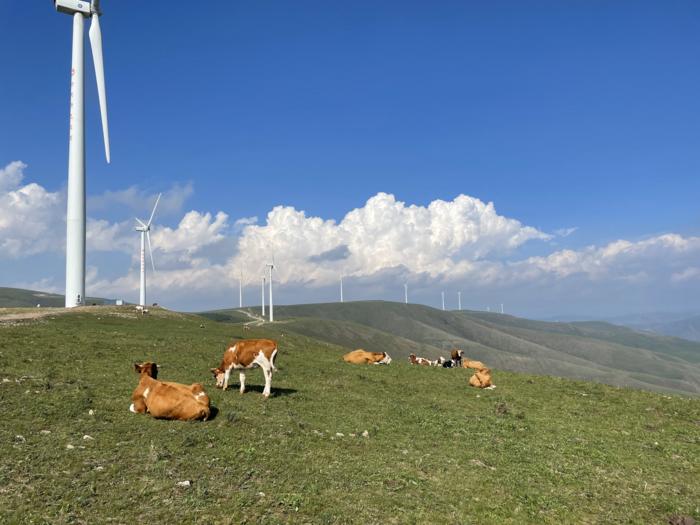
Climate change is significantly altering bioclimatic environments in China’s dry–wet transition zones, according to a recent study published in the Journal of Hydrology.

Credit: LI Mingxing
Climate change is significantly altering bioclimatic environments in China’s dry–wet transition zones, according to a recent study published in the Journal of Hydrology.
The research conducted by scientists from the Institute of Atmospheric Physics at the Chinese Academy of Sciences, the UK Met Office and Chinese Academy of Meteorological Sciences, addresses the challenges of assessing climate change impacts on vegetation ecosystems, which vary greatly across different spatiotemporal scales. The study examines how vegetation ecosystems respond and adapt to climate change, alongside the effects of soil water and heat processes. Bioclimatic environment change acts as a crucial link between climate change and local conditions affecting vegetation ecosystems.
“In areas where current vegetation models fall short, bioclimatic indicators offer an alternative for studying climate change impacts on ecological environments,” notes Dr. Mingxing Li, the lead author of the study.
The study analyzes historical observations (1979-2018) and future scenario projections (2006-2100) under different climate scenarios. Among these scenarios is the Representative Concentration Pathway 8.5 (RCP8.5), which represents a high greenhouse gas emissions pathway leading to substantial global warming and climate change impacts. Under the RCP8.5 scenario, greenhouse gas emissions continue to rise throughout the 21st century, resulting in severe climate change consequences.
“We focus on ecological environments and habitat suitability for responsive ecosystems, considering climate change, bioclimatic water and heat conditions, and habitat suitability.” Says Dr. Li.
The findings reveal significant changes in bioclimatic environments across dry–wet climate transition zones, particularly under the RCP8.5 scenario. By the end of the 21st century, the local growing season length (GSL) could extend by 60 days, with 30% of the GSL facing heat stress. Despite some improvements in the middle parts of transition zones, overall water conditions worsen both in the air and soil. This leads to a northwestward shift of sustainable grasslands, with a reduction of approximately 131 million square kilometers in total area.
The study highlights the importance of winter and spring heat-water conditions in driving these changes and identifies climate transition zones as hotspots of ecosystem vulnerability, emphasizing the need for targeted impact assessment and adaptation studies.
“While our focus is on China, our findings offer insights for addressing climate change in other transition zones worldwide,” adds Dr. Li.
Journal
Journal of Hydrology
Article Title
Climate change reshapes bioclimatic environments in China’s dry–wet transition zones
Article Publication Date
22-Mar-2024
Cite Scienmag News
Sloane Callahan. (April 26, 2024). Study shows climate change impact on China’s dry–wet transition zones. Scienmag. https://scienmag.com/study-shows-climate-change-impact-on-chinas-dry-wet-transition-zones/
Sloane Callahan. "Study shows climate change impact on China’s dry–wet transition zones." Scienmag, 26 April 2024, https://scienmag.com/study-shows-climate-change-impact-on-chinas-dry-wet-transition-zones/. Accessed 4 September 2026.
Sloane Callahan. "Study shows climate change impact on China’s dry–wet transition zones." Scienmag. April 26, 2024. https://scienmag.com/study-shows-climate-change-impact-on-chinas-dry-wet-transition-zones/

