


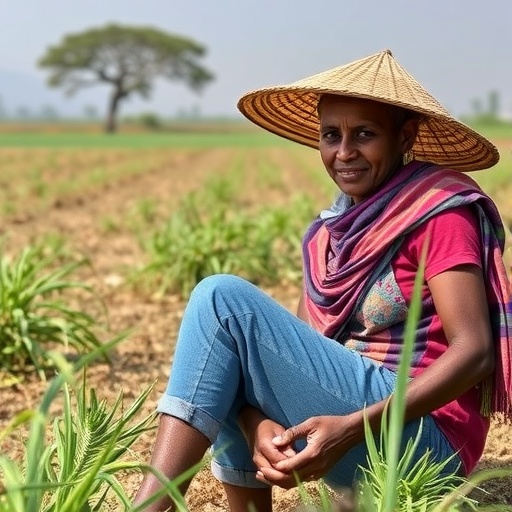
When drought strikes a farming region, the instinctive policy response is often to send agronomists, distribute drought-resistant seeds, or build irrigation infrastructure. A new study from western Iran suggests that this instinct may be aimed at the wrong target first. Research on rural households in Kermanshah Province, a predominantly rain-fed agricultural region that has endured repeated and intensifying droughts over the past two decades, has produced a quantitative ranking of the assets that determine whether a family can keep itself fed when the rains fail. The results are striking: money, not knowledge or land, is the single most powerful determinant of food resilience, and the gap between what farmers know and what they can afford to do is emerging as one of the most serious obstacles to drought adaptation anywhere.
The study, published in Results in Engineering by Masoumeh Taghibaygi and Amirhossein Alibaygi, surveyed 380 rural households in Kermanshah Province and applied the sustainable livelihood framework, a widely used development model that decomposes household well-being into five capitals: human, social, natural, physical, and financial. Using partial least squares structural equation modeling, or PLS-SEM, the researchers tested whether each form of capital predicted food resilience, defined as the capacity of a household food system to anticipate, resist, adapt to, and recover from climatic shocks. All five capitals turned out to be statistically significant predictors, but their relative weights were far from equal, and together they explained nearly 64 percent of the variance in household food resilience.
The headline finding is the dominance of financial capital. With a standardized path coefficient of 0.345 and an effect size classified as large under conventional statistical thresholds, financial capital, measured through indicators such as annual income, savings, access to loans and banking facilities, income diversification, and the ability to cover essential expenses during crises, exerted by far the strongest influence on food resilience. Social capital, captured through participation in cooperatives, trust in local institutions, social solidarity, and communication with support institutions outside the village, ranked second with a coefficient of 0.234 and a medium effect size. Human capital, natural capital, and physical capital followed in descending order, with physical capital showing the smallest effect at 0.123. The full ranking, financial, social, human, natural, and physical, gives policymakers an evidence-based sequence for allocating scarce resources.
Equally alarming is the baseline condition of the households studied. Using the Household Food Insecurity Access Scale, the researchers found that 65.79 percent of rural households in Kermanshah were food insecure, more than double the national average of 24 percent for Iran. Among the food-insecure households, nearly 40 percent experienced actual hunger, with 26.84 percent reporting moderate hunger and 12.63 percent reporting severe hunger, meaning adults and children were cutting or skipping meals, eating less than usual, and in the most severe cases going entire days without food. The province’s vulnerability is structural: more than 70 percent of its agricultural land is rain-fed, the province serves as a food supplier for western Iran, and its dense rural settlement pattern means that any collapse in production threatens a large population at once. Local agricultural reports cited in the study indicate that rainfed crop yields have fallen by roughly 30 percent in drought years.
Perhaps the most counterintuitive result concerns the balance between knowledge and resources. Among the five capitals, only human capital, encompassing literacy, years of farming experience, health, and awareness of drought adaptation strategies, scored at a relatively desirable level, averaging 3.52 out of 5. Households in the sample had, on average, 31 years of agricultural experience, and 28 percent of household heads held a secondary school diploma while 10.6 percent held a university degree. By contrast, financial capital averaged just 2.12 out of 5 and physical capital 2.34. In other words, farmers in Kermanshah largely know what they should do, adopt modern irrigation, plant drought-resistant varieties, diversify their livelihoods, but they lack the savings, credit, machinery, and infrastructure to act on that knowledge. The authors describe this as the gap between “knowing” and “being able to do,” and argue that it is one of the most important barriers to drought adaptation, implying that extension and education programs delivered in isolation are unlikely to change outcomes.
The methodology behind these conclusions is technically rigorous. Because human and social capitals are conceptually composed of correlated perceptions and behaviors, they were modeled as reflective constructs and validated through confirmatory factor analysis, with all standardized loadings above 0.5, Cronbach’s alpha and composite reliability values exceeding 0.70, and average variance extracted above 0.50. Natural, physical, and financial capitals, which are better understood as composites built from distinct components such as land size, water access, machinery, and credit, were modeled formatively, with all outer weights significant and variance inflation factors well below the multicollinearity threshold of 3.3. Discriminant validity was confirmed using the Fornell-Larcker criterion and the heterotrait-monotrait ratio, with the highest HTMT value, 0.65 between financial capital and food resilience, remaining below the conservative 0.85 threshold, and bias-corrected bootstrap confidence intervals from 5,000 resamples never approaching 1. Model fit indices, including an SRMR of 0.08, fell within acceptable ranges, and the model demonstrated predictive relevance with a Stone-Geisser Q² of 0.41, while the PLSpredict procedure showed out-of-sample error lower than a naïve benchmark.
Why does financial capital eclipse everything else when drought intensifies? The authors offer a mechanistic explanation grounded in how drought propagates through a rural economy. Drought reduces agricultural production, which cuts the primary income of farming households precisely when market food prices rise due to reduced supply. Households with savings, access to credit, or non-agricultural income can draw on these buffers to purchase food and to invest in adaptation measures such as irrigation equipment or resilient crop varieties. Households without such buffers are forced to reduce consumption, skip meals, or substitute low-quality foods. Financial capital thus functions both as an immediate shock absorber and as the enabling resource that makes every other form of adaptation possible, since machinery, improved seeds, and even participation in cooperative ventures all require money.
The finding that financial capital outranks social capital marks a shift from earlier research in the same province. A previous study by Ehteshammajd and colleagues had identified social capital as the most important factor for food security in Kermanshah, with financial capital playing a secondary role. The new results suggest that the intensified and prolonged drought conditions of recent years, along with deepening economic pressure, have changed the calculus: when economic stress becomes acute enough, the immediate need for liquid resources temporarily outweighs the value of social networks. The authors are careful to note that this does not diminish the importance of social ties, which facilitate information flow, mutual assistance, risk-sharing, and collective projects such as water storage ponds and the restoration of traditional qanat irrigation systems. Rather, the ranking reflects the severity of prevailing conditions, and it underscores their broader theoretical point: the priority order of livelihood capitals is not universal but depends on the ecological and economic context, and it can shift as a crisis deepens.
The study also challenges assumptions about the value of land and water alone. Natural capital, which includes cultivated land size, access to water resources, soil quality, livestock ownership, and crop diversity, showed only a small effect on food resilience. The reason is sobering: under drought conditions, the very resources that constitute natural capital are themselves degraded, so households that depend solely on land and rainfall face serious problems no matter how fertile their soil was in normal years. With more than 80 percent of the province’s cultivated land rainfed, repeated droughts have reduced groundwater levels and soil moisture, undermining the productivity of even the best fields. Similarly, physical capital, machinery, roads, storage, and energy, ranks last because equipment is ineffective without water, requires financial capital to purchase and maintain, and loses value as infrastructure when production volumes collapse.
The policy implications are concrete. The authors recommend establishing microcredit funds that accept group-based solidarity collateral instead of property deeds, a model proven in Bangladesh, and designing index-based agricultural insurance that triggers payouts based on rainfall or drought indices without requiring costly field assessments. They propose rural marketing cooperatives to eliminate intermediaries, financial empowerment programs for rural women in activities such as mushroom cultivation and product packaging, machinery service centers so that smallholders can rent equipment affordably, and training programs explicitly bundled with microcredit packages for certified seeds and irrigation equipment. They also recommend reorienting Iran’s agricultural extension system from a purely educational model toward one that combines instruction with tangible access to finance and equipment, alongside supplementary nutrition programs during low-rainfall seasons for households experiencing moderate and severe hunger.
Beyond its immediate regional relevance, the study makes a methodological contribution. By demonstrating within a single PLS-SEM model that some livelihood capitals are best measured formatively while others are best measured reflectively, the research offers guidance for future studies of household resilience. Its authors also acknowledge limitations: the analysis is cross-sectional, relies on self-reported questionnaires, and examines only direct effects, leaving open questions about whether human capital acts as a moderator that amplifies the effectiveness of financial investment. Yet the central message travels well beyond Kermanshah. Where drought is severe and chronic, the study concludes, drought adaptation policies succeed when they are designed locally and sequenced according to evidence, and that sequence begins with putting financial resources directly into the hands of the rural households who already know what to do with them.
Cite Scienmag News
Denise Maddox. (September 9, 2026). Study reveals which livelihood capital best shields rural food security from drought. Scienmag. https://scienmag.com/study-reveals-which-livelihood-capital-best-shields-rural-food-security-from-drought/
Denise Maddox. "Study reveals which livelihood capital best shields rural food security from drought." Scienmag, 9 September 2026, https://scienmag.com/study-reveals-which-livelihood-capital-best-shields-rural-food-security-from-drought/. Accessed 9 September 2026.
Denise Maddox. "Study reveals which livelihood capital best shields rural food security from drought." Scienmag. September 9, 2026. https://scienmag.com/study-reveals-which-livelihood-capital-best-shields-rural-food-security-from-drought/


