


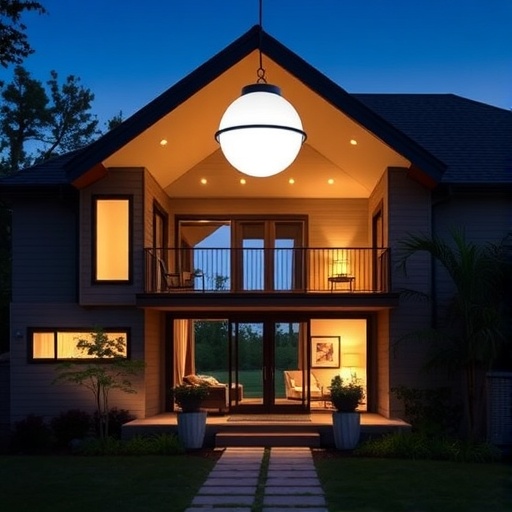
A groundbreaking study conducted by researchers at the University of East London (UEL) reveals that household energy consumption dedicated to lighting can be reduced by over 15% without compromising on comfort. This remarkable advancement stems from a strategic integration of contemporary LED lighting technology with sophisticated lighting design methodologies, demonstrating the potential to revolutionize energy efficiency in residential environments. The research was spearheaded by Dr. Jawed Qureshi, a Senior Lecturer specializing in Structural Engineering and Design, highlighting a fusion of engineering principles with practical energy solutions.
Traditional lighting systems in domestic settings have long suffered from inefficient layouts based on outdated manual planning techniques. Such methods typically employ simple layouts and rudimentary calculations that often result in uneven illumination, wasted electricity, and spaces that fail to meet modern lighting standards. These issues are especially prevalent in the UK’s aging housing stock, where legacy systems remain embedded in the architectural fabric. Recognizing these challenges, the UEL team employed state-of-the-art design software to rethink and optimize lighting strategies for residential spaces.
Utilizing advanced simulation tools, the researchers meticulously analyzed the impact of lighting placement, fixture types, and output levels to establish an optimal balance between visual comfort and energy conservation. Through modeling and comparative analysis, they illuminated the shortcomings of conventional approaches while showcasing the advantages of data-driven, software-based design. This method enables precision in lighting distribution, mitigating the common problems of over-illumination and dark zones that plague manually designed systems.
The study focused on 20 representative one-bedroom flats, assessing their existing lighting layouts against redesigned arrangements developed using DIALux, a professional lighting simulation platform. Alongside the adoption of LED fittings known for their superior energy efficiency and longevity, the redesigned setups achieved an average reduction in energy consumption from 10.25 kWh to 8.68 kWh per household—a notable 15.3% decrease. Importantly, these energy savings were accompanied by significant enhancements in brightness quality, thereby elevating visual comfort without inflating energy use.
This dual achievement marks a paradigm shift in residential lighting design, underscoring that the mere replacement of incandescent bulbs with LEDs is insufficient for maximal energy efficiency gains. Dr. Qureshi emphasizes that intelligent lighting design, which integrates precise planning with technology, unlocks the true potential of energy savings while enhancing occupant experience. The research dispels the misconception that LEDs alone are a panacea; the synergy between technological innovation and thoughtful layout planning emerges as the critical factor.
Moreover, the research unveils nuanced insights into energy consumption patterns. While most cases demonstrated reduced power usage, a minority witnessed increased consumption due to the necessity of meeting higher comfort standards—illustrating that the ultimate objective should be a judicious balance between saving energy and fulfilling lighting requirements. This delicate equilibrium underscores the complexity of lighting design where user comfort, visual quality, and sustainability goals intersect.
Lighting accounts for a substantial proportion of household electricity expenditure, making even marginal improvements highly impactful in the broader context of energy conservation and carbon footprint reduction. As the UK’s residential sector faces mounting pressure to retrofit aging buildings in pursuit of net-zero emissions, the study’s findings offer a pragmatic, scalable pathway that eschews costly structural renovations in favor of strategic lighting enhancements.
The application of advanced lighting simulation tools such as DIALux not only enables more accurate predictions of light distribution but also facilitates iterative refinement of lighting schemes to meet stringent UK visual comfort benchmarks. This software-driven methodology transforms lighting design into a precise science, optimizing fixture placement, luminous flux, and energy consumption with unprecedented rigor.
Dr. Qureshi highlights the practical implications of this approach, stressing its versatility across both new construction and retrofit projects. This adaptability ensures that a wide segment of the housing market can benefit from energy-efficient lighting design without the logistical or financial burdens traditionally associated with large-scale building alterations. This democratization of sustainable design solutions represents a noteworthy stride toward environmentally responsible living standards.
The collaborative study, co-authored by Tharani Hemarathne, is published in the peer-reviewed journal Buildings. It sets a new benchmark for experimental research in the realm of residential energy use, integrating engineering expertise with applied technology to resolve pervasive inefficiencies. Its insights resonate profoundly in an era increasingly defined by sustainability imperatives and technological innovation.
Consequently, this research aligns perfectly with global efforts to promote sustainable development by fortifying residential energy efficiency. It represents a compelling case where engineering ingenuity meets environmental stewardship, charting a path that benefits homeowners, reduces ecological impact, and supports national and international climate objectives.
In conclusion, the UEL study offers a fresh perspective on how lighting design can serve as a fulcrum for reducing residential energy consumption without compromising occupant comfort. Through the intelligent application of simulation-based design and energy-saving LED technology, homes can become brighter, more comfortable, and substantially more energy-efficient. This approach not only addresses immediate energy savings but also fosters a deeper integration of sustainable principles within residential engineering and architectural practices.
News Publication Date: 17-Apr-2026
Web References: http://dx.doi.org/10.3390/buildings16081591
References: Qureshi, J., & Hemarathne, T. (2026). Simulation-Based Visual-Comfort and Energy-Optimised Lighting Design for Residential Buildings: A Comparative Study of Manual and DIALux-Based Approaches. Buildings.
Keywords
Engineering, Energy resources, Electrical power, Energy resources conservation, Electrical power generation, Electrical engineering, Environmental engineering, Technology, Architecture, Environmental sciences, Systems engineering, Civil engineering, Sustainable development, Industrial science, Sustainability, Sustainable energy
Cite Scienmag News
Denise Maddox. (April 30, 2026). Study Reveals Intelligent Lighting Can Slash Home Energy Consumption by 15%. Scienmag. https://scienmag.com/study-reveals-intelligent-lighting-can-slash-home-energy-consumption-by-15/
Denise Maddox. "Study Reveals Intelligent Lighting Can Slash Home Energy Consumption by 15%." Scienmag, 30 April 2026, https://scienmag.com/study-reveals-intelligent-lighting-can-slash-home-energy-consumption-by-15/. Accessed 4 September 2026.
Denise Maddox. "Study Reveals Intelligent Lighting Can Slash Home Energy Consumption by 15%." Scienmag. April 30, 2026. https://scienmag.com/study-reveals-intelligent-lighting-can-slash-home-energy-consumption-by-15/


