

Sunday, July 26, 2026
Science
No Result
View All Result
  • Login
  • HOME
  • SCIENCE NEWS
  • CONTACT US
  • HOME
  • SCIENCE NEWS
  • CONTACT US
No Result
View All Result
Scienmag
No Result
View All Result
Home Science News Archaeology

Study Quantifies Damage to Historic Sites Across Syria

July 26, 2026
in Archaeology
Reading Time: 2 mins read
0
Study Quantifies Damage to Historic Sites Across Syria
65
SHARES
587
VIEWS
Share on FacebookShare on Twitter
ADVERTISEMENT

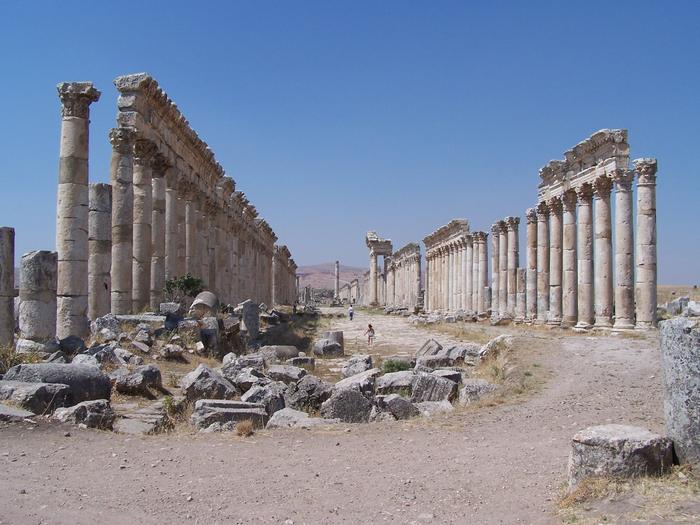
Syria’s civil war has been catastrophic for cultural heritage, and new remote-sensing evidence shows how destruction continued long after the initial surge of looting. Beginning in 2011 and stretching into 2024, the conflict left hundreds of archaeological landscapes in an alarmingly altered state—some reduced to pits, others reshaped by heavy machinery.

Until recently, a large-scale assessment of damage relied on analysis that ended in 2016, leaving a major blind spot about what happened in the years that followed, including at internationally recognized sites. The gap mattered most for World Heritage locations such as Palmyra and for long-term excavation areas like Mari and Apamea.

A Dartmouth-led study, now published in the journal Heritage, revisits Syria’s post-war “damage timeline” by analyzing 200 archaeological sites using satellite imagery from Google Earth and data from the European Space Agency’s Pleiades program. Rather than treating looting as a single phenomenon, the researchers categorized observed harm into distinct types.

The team tracked traditional looting as isolated excavation pits, while mechanized looting was identified by patterns consistent with bulldozer scraping across exposed surfaces. They also flagged militarization, including features such as dugouts, and they recorded construction or encampments, such as temporary shelters associated with displacement.

The results indicate a sharp escalation after 2015. From 2015 to 2025, 59% of sites show evidence of looting, compared with just 13% during the earlier period of 2011 to 2016. The study emphasizes that mechanized looting often aligns with military activity, suggesting a systematic approach rather than sporadic scavenging.

Lead author Jesse Casana notes that bulldozers can remove the surface layer repeatedly: first to uncover artifacts, then to strip additional material for further search. Because archaeological mounds build up over centuries, this process effectively destroys strata that hold information about multiple eras.

One case study illustrates the broader pattern. At Ain Dara, imagery suggests that a military compound emerged by 2016, and by February 2019 bulldozing markers appeared across multiple zones. By January 2022, nearly the entire surface had been combed, leaving much of the site’s exposed archaeology damaged, aside from a relatively intact stone-built temple complex dating to the first millennium BCE.

Casana argues these findings provide a practical roadmap for mitigation. Before any targeted excavations begin, sites require systematic investigation to locate remaining architecture and artifacts still recoverable from heavily disturbed contexts.

Subject of Research: Archaeological site damage in Syria during and after the civil war (remote sensing; looting and mechanized destruction)

Article Title: Remote Sensing-Based Analysis of Archaeological Site Damage in Syria: Revisiting a Post-War Landscape

News Publication Date: 23-May-2026

Web References: https://www.mdpi.com/2571-9408/9/6/209 ; http://dx.doi.org/10.3390/heritage9060209

References: 10.3390/heritage9060209

Image Credits: Photo by Jesse Casana.

Keywords: Syria, civil war, archaeological sites, remote sensing, satellite imagery, looting, mechanized looting, bulldozing, militarization, cultural heritage

Tags: damage timeline of Syrian sitesEuropean Space Agency satellite monitoringlong-term impact of conflict on cultural siteslooting and vandalism in Syriamechanized looting in archaeological sitespost-war archaeological site analysisremote sensing archaeological damagesatellite imagery heritage assessmentSyria civil war impact on heritageSyria cultural heritage destructionuse of Google Earth for heritage preservationWorld Heritage site destruction Syria
Share26Tweet16
Previous Post

Study shows climate change alters cooling efficiency and increases energy demand

Next Post

Digital Sensors Identify Flavor Fingerprints in Minnan Oolong Tea

Related Posts

Silkworm Farming in Southern Central Asia Preceded the Silk Road
Archaeology

Silkworm Farming in Southern Central Asia Preceded the Silk Road

July 26, 2026
Ancient Egyptian princesses from 4,000 years ago were skilled archers,
Archaeology

Ancient Egyptian princesses from 4,000 years ago were skilled archers, study finds

July 17, 2026
Precolonial Brazilian Cerrado Villages Grew Maize-Based Polyculture for Centuries
Archaeology

Precolonial Brazilian Cerrado Villages Grew Maize-Based Polyculture for Centuries

July 15, 2026
Hasmonean and Qumran calendars combine to solve a Dead Sea
Archaeology

Hasmonean and Qumran calendars combine to solve a Dead Sea Scrolls mystery

July 14, 2026
Medieval Graves Rarely Shared by Close Relatives
Archaeology

Medieval Graves Rarely Shared by Close Relatives

July 10, 2026
Genomic Analysis Reveals Ancestral Connections Among Scythian Elite Burials Across
Archaeology

Genomic Analysis Reveals Ancestral Connections Among Scythian Elite Burials Across the Eurasian Steppe

July 4, 2026
Next Post
Digital Sensors Identify Flavor Fingerprints in Minnan Oolong Tea

Digital Sensors Identify Flavor Fingerprints in Minnan Oolong Tea

  • Mothers who receive childcare support from maternal grandparents show more

    Mothers who receive childcare support from maternal grandparents show more parental warmth, finds NTU Singapore study

    27656 shares
    Share 11059 Tweet 6912
  • University of Seville Breaks 120-Year-Old Mystery, Revises a Key Einstein Concept

    1061 shares
    Share 424 Tweet 265
  • Bee body mass, pathogens and local climate influence heat tolerance

    682 shares
    Share 273 Tweet 171
  • Researchers record first-ever images and data of a shark experiencing a boat strike

    546 shares
    Share 218 Tweet 137
  • Groundbreaking Clinical Trial Reveals Lubiprostone Enhances Kidney Function

    531 shares
    Share 212 Tweet 133
Science

Embark on a thrilling journey of discovery with Scienmag.com—your ultimate source for cutting-edge breakthroughs. Immerse yourself in a world where curiosity knows no limits and tomorrow’s possibilities become today’s reality!

RECENT NEWS

  • Enantioselective Biosensors Guide the Evolution of Asymmetric Biocatalysts
  • Study Charts rAAV Dose Costs by Indication and Identifies Cost-Cutting Strategies
  • Magnetic Signals in Nuclei Reveal How Stars Build Chemical Elements
  • Highly Tunable Electro-Optic Isolator Enables Photonic Integrated Signal Routing

Categories

  • Agriculture
  • Anthropology
  • Archaeology
  • Athmospheric
  • Biology
  • Biotechnology
  • Blog
  • Bussines
  • Cancer
  • Chemistry
  • Climate
  • Earth Science
  • Editorial Policy
  • Marine
  • Mathematics
  • Medicine
  • Pediatry
  • Policy
  • Psychology & Psychiatry
  • Science Education
  • Social Science
  • Space
  • Technology and Engineering

Subscribe to Blog via Email

Enter your email address to subscribe to this blog and receive notifications of new posts by email.

Join 5,146 other subscribers

© 2025 Scienmag - Science Magazine

Welcome Back!

Login to your account below

Forgotten Password?

Retrieve your password

Please enter your username or email address to reset your password.

Log In
No Result
View All Result
  • HOME
  • SCIENCE NEWS
  • CONTACT US

© 2025 Scienmag - Science Magazine

Discover more from Science

Subscribe now to keep reading and get access to the full archive.

Continue reading
