


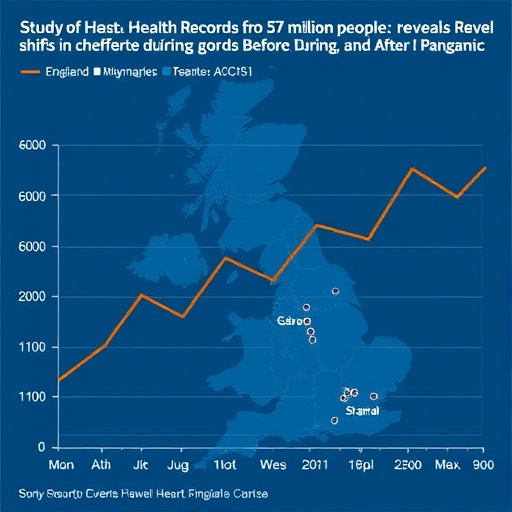
The COVID-19 pandemic has left an indelible mark on global health, but its impact on cardiovascular disease has only now come into sharp focus thanks to a groundbreaking study utilizing anonymized electronic health record data for over 57 million people across England. This unprecedented research, conducted within the NHS England Secure Data Environment, reveals complex shifts in the incidence, prevalence, and outcomes of a wide spectrum of cardiovascular conditions from 2020 through 2024, shedding light on disparities shaped by ethnicity, geography, and socioeconomic status.
During the initial pandemic lockdown in 2020, researchers observed a pronounced decline in new cardiovascular diagnoses. Paradoxically, those diagnosed at that time faced a significantly higher risk of death within 30 days compared to pre-pandemic periods. Experts attribute this grim trend to the strain imposed on healthcare systems, which likely limited care to only the most critically ill individuals. This nuanced understanding underscores the unintended consequences of a health crisis that demanded urgent reallocation of resources.
The study’s scope extends beyond mere incidence, incorporating a detailed analysis of short-term mortality post-diagnosis, as well as tracking heart attacks and strokes occurring within a year of initial cardiovascular diagnoses. With data drawn from hospital admissions, primary care, death registries, and specialist datasets, the investigators painted a comprehensive epidemiological portrait of 79 distinct cardiovascular diseases, including conditions like myocarditis and heart failure.
One compelling revelation lies in the ethnically stratified patterns of diagnosis and outcomes. For instance, individuals of Bangladeshi, Indian, and Pakistani descent exhibited higher rates of coronary vascular disease, yet their fatality rates post-diagnosis were generally lower than those seen in the White British population. Conversely, people of African, Caribbean, and other Black ethnicities had a greater predisposition to hypertension-related cardiovascular conditions, though again with relatively less fatal outcomes compared to the White British group. These findings spotlight the intertwining influences of genetic, environmental, and healthcare access factors that require further exploration.
Geographical disparities also loom large in the study’s findings. Regions such as the North, Midlands, and parts of the South of England — alongside coastal areas in the East — displayed higher fatality rates from cardiovascular events like heart attacks and strokes. This spatial heterogeneity suggests that deprivation and systemic healthcare inequalities continue to dictate fatal outcomes, offering compelling evidence for more regionally tailored public health interventions.
A striking increase in the incidence and prevalence of myocarditis and heart failure in 2024 compared to pre-pandemic levels was uncovered, with myocarditis diagnoses rising by 26% and short-term mortality associated with these cases doubling. Such findings may partly reflect a backlog of cases emerging as healthcare systems recover from pandemic disruptions. Moreover, they hint at the possibility of direct myocardial damage caused by COVID-19 infection, as well as indirect effects stemming from delayed diagnoses and interrupted treatment pathways.
Co-author Professor William Whiteley from the BHF Data Science Centre emphasized that restoring diagnosis rates to pre-pandemic levels is a critical step but acknowledged that disparities persist. The study’s data offers a crucial foundation for directing healthcare resources with greater precision, ensuring that interventions target those communities and regions bearing disproportionate burdens, ultimately saving lives through timely and equitable care.
Echoing this sentiment, Professor Angela Wood of the University of Cambridge highlighted the value of whole population data for illuminating health inequalities and tracking cardiovascular disease trends over time. She emphasized how these insights could shape policy decisions and improve healthcare delivery, particularly in preparation for future pandemics that may similarly disrupt routine care.
The study’s principal author, Dr. Elias Allara, underscored the unprecedented granularity achieved by leveraging linked health records at the population level. Through this approach, the researchers have identified critical gaps in cardiovascular diagnosis and follow-up care, laying the groundwork for targeted strategies aimed at bridging these gaps and addressing long-standing inequities within the NHS and beyond.
Importantly, this research was conducted under special regulatory provisions enacted during the pandemic to facilitate rapid COVID-19-related investigations. While the current study focuses on pandemic-era cardiovascular disease impacts, the authors advocate for continued access to such linked datasets beyond COVID-19 research. They argue that sustainable access would enable ongoing monitoring of cardiovascular health and inform dynamic healthcare policy, regional resource allocation, and research initiatives.
To promote transparency and broader utility, the research team has developed an interactive online dashboard available through the BHF Data Science Centre website. This tool allows clinicians, policymakers, researchers, and the public to explore the rich dataset and insights, fostering informed decision-making and enhanced awareness of cardiovascular disease dynamics across England.
Overall, this landmark study marks a significant advance in understanding how a global health emergency reverberates through chronic disease landscapes, with wide-ranging implications for clinical practice, health equity, and policy formulation. As healthcare systems worldwide grapple with pandemic aftermaths, these findings provide critical scientific evidence to guide efforts toward resilient, equitable cardiovascular care delivery in the years ahead.
News Publication Date: 27-Oct-2025
Web References:
References:
Allara E, Whiteley W, Wood A et al. Burden of cardiovascular diseases in England (2020–24): a national cohort using electronic health records data. The Lancet Public Health. 2025.
Cite Scienmag News
Frances Kline. (October 28, 2025). Study of Health Records from 57 Million People in England Reveals Shifts in Heart Disease Trends Before, During, and After the Pandemic. Scienmag. https://scienmag.com/study-of-health-records-from-57-million-people-in-england-reveals-shifts-in-heart-disease-trends-before-during-and-after-the-pandemic/
Frances Kline. "Study of Health Records from 57 Million People in England Reveals Shifts in Heart Disease Trends Before, During, and After the Pandemic." Scienmag, 28 October 2025, https://scienmag.com/study-of-health-records-from-57-million-people-in-england-reveals-shifts-in-heart-disease-trends-before-during-and-after-the-pandemic/. Accessed 4 September 2026.
Frances Kline. "Study of Health Records from 57 Million People in England Reveals Shifts in Heart Disease Trends Before, During, and After the Pandemic." Scienmag. October 28, 2025. https://scienmag.com/study-of-health-records-from-57-million-people-in-england-reveals-shifts-in-heart-disease-trends-before-during-and-after-the-pandemic/


