

Monday, July 27, 2026
Science
No Result
View All Result
  • Login
  • HOME
  • SCIENCE NEWS
  • CONTACT US
  • HOME
  • SCIENCE NEWS
  • CONTACT US
No Result
View All Result
Scienmag
No Result
View All Result
Home Science News Biology

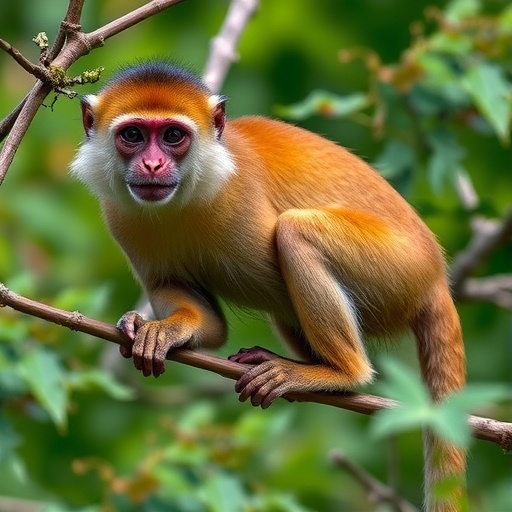
Study Finds Species-Specific MANF Function in Nonhuman Primates

July 27, 2026
in Biology
Reading Time: 2 mins read
0
Study Finds Species-Specific MANF Function in Nonhuman Primates

Study Finds Species-Specific MANF Function in Nonhuman Primates

65
SHARES
587
VIEWS
Share on FacebookShare on Twitter
ADVERTISEMENT

Mesencephalic astrocyte-derived neurotrophic factor (MANF) is a widely expressed, non-canonical neurotrophic protein in the brain. While prior studies suggest MANF can influence neuronal behavior in multiple disease contexts, its cell-type-specific functions—and why human genetic loss of MANF causes severe neurodevelopmental effects—have remained unclear. Notably, evidence from patients links MANF deficiency to microcephaly, yet conventional rodent models have not reproduced this outcome.

To resolve the species gap, researchers compared mice and non-human primates and used CRISPR/Cas9-based gene editing to reduce MANF in vivo and in primary cell cultures. By combining molecular assays, transcriptome profiling, and functional rescue experiments, the study mapped how acute MANF depletion reshapes survival signaling in astrocytes.

The central result is striking: MANF loss compromises astrocyte viability in monkeys but does not measurably affect astrocyte or neuron survival in mice. This divergence aligns with the broader observation that MANF knockout mice often show limited neurological phenotypes, whereas humans carrying MANF deletions develop profound developmental abnormalities. Together, the data support a primate-specific requirement for MANF in maintaining astrocyte integrity.

Mechanistically, the team identified a downstream signaling route mediated by leukemia inhibitory factor (LIF) and signal transducer and activator of transcription 3 (STAT3). Reduced MANF in monkey astrocytes leads to decreased LIF expression, which in turn dampens STAT3 pathway activity—creating pro-apoptotic conditions that trigger selective astrocyte death.

In contrast to mice, where this survival coupling is absent or functionally muted, primate astrocytes appear to rely on the MANF–LIF–STAT3 axis as a critical guardian signal. The study further demonstrates causality by showing that restoring LIF signaling can mitigate the apoptotic cascade initiated by MANF deficiency.

These findings position LIF as a plausible therapeutic leverage point for MANF-related neurodevelopmental disorders. More broadly, the work highlights the value of non-human primate models when studying human-relevant brain mechanisms that may not translate cleanly from rodents.

The research, titled “MANF is essential for astrocyte survival in the monkey brain,” was published in Protein & Cell. By clarifying how a conserved neurotrophic factor can operate through species-specific circuitry, the study provides a testable framework for targeted interventions aimed at preserving astrocyte survival during development.

Subject of Research: Experimental study
Article Title: MANF is essential for astrocyte survival in the monkey brain
Web References: http://dx.doi.org/10.1093/procel/pwag031
References: 10.1093/procel/pwag031
Image Credits: HIGHER EDUCATION PRESS
Keywords: astrocytes; MANF; LIF; STAT3; microcephaly; CRISPR/Cas9; primate neuroscience; neurotrophic signaling

Tags: astrocyte signaling pathwayscomparative neuroscience between rodents and primatesCRISPR/Cas9 gene editing in neurosciencedifferential effects of neurotrophic factors across speciesgenetic basis of microcephalyLIF-STAT3 signaling in astrocytesMANF role in astrocyte survivalmolecularneurodegeneration and neurodevelopmental abnormalitiesNeurotrophic factors in primate brain developmentnon-human primate models of neurodevelopmental disordersspecies-specific gene functions
Share26Tweet16
Previous Post

Orcas filmed exploding a giant fish after ramming it with force, possibly playing

Next Post

Bath Drug Discovery Spinout Wins National Emerging Technologies Competition

Related Posts

Invasive nonnative trees dominate Neotropical secondary forests, then decline
Biology

Invasive nonnative trees dominate Neotropical secondary forests, then decline

July 27, 2026
Klebsiella pneumoniae Suppresses Blood Vessel Dilation via Capsule and T6SS
Biology

Klebsiella pneumoniae Suppresses Blood Vessel Dilation via Capsule and T6SS

July 27, 2026
Endocytosis-Independent Biomolecule Delivery: Direct Translocation Past Cellular Barriers
Biology

Endocytosis-Independent Biomolecule Delivery: Direct Translocation Past Cellular Barriers

July 26, 2026
Scientists uncover molecular mechanisms of Pirsonia diadema infection in diatoms
Biology

Scientists uncover molecular mechanisms of Pirsonia diadema infection in diatoms

July 26, 2026
T-Cell Engagers: Balancing Activity and Safety in Engineering Designs
Biology

T-Cell Engagers: Balancing Activity and Safety in Engineering Designs

July 26, 2026
SPF2 and SGO2/CTF18 limit centromere-near crossovers by regulating SUMOylation
Biology

SPF2 and SGO2/CTF18 limit centromere-near crossovers by regulating SUMOylation

July 26, 2026
Next Post
Bath Drug Discovery Spinout Wins National Emerging Technologies Competition

Bath Drug Discovery Spinout Wins National Emerging Technologies Competition

  • Mothers who receive childcare support from maternal grandparents show more

    Mothers who receive childcare support from maternal grandparents show more parental warmth, finds NTU Singapore study

    27656 shares
    Share 11059 Tweet 6912
  • University of Seville Breaks 120-Year-Old Mystery, Revises a Key Einstein Concept

    1061 shares
    Share 424 Tweet 265
  • Bee body mass, pathogens and local climate influence heat tolerance

    682 shares
    Share 273 Tweet 171
  • Researchers record first-ever images and data of a shark experiencing a boat strike

    546 shares
    Share 218 Tweet 137
  • Groundbreaking Clinical Trial Reveals Lubiprostone Enhances Kidney Function

    531 shares
    Share 212 Tweet 133
Science

Embark on a thrilling journey of discovery with Scienmag.com—your ultimate source for cutting-edge breakthroughs. Immerse yourself in a world where curiosity knows no limits and tomorrow’s possibilities become today’s reality!

RECENT NEWS

  • Unwritten social rules, not government oversight, sustain forests for the future
  • Mapping Project Helps Shield Coastal World Heritage Sites From Climate Risks
  • Biochar Makes Green Roofs Potent Methane Sinks
  • Study finds mental health treatment for serious offenders reduces harm, costs

Categories

  • Agriculture
  • Anthropology
  • Archaeology
  • Athmospheric
  • Biology
  • Biotechnology
  • Blog
  • Bussines
  • Cancer
  • Chemistry
  • Climate
  • Earth Science
  • Editorial Policy
  • Marine
  • Mathematics
  • Medicine
  • Pediatry
  • Policy
  • Psychology & Psychiatry
  • Science Education
  • Social Science
  • Space
  • Technology and Engineering

Subscribe to Blog via Email

Enter your email address to subscribe to this blog and receive notifications of new posts by email.

Join 5,146 other subscribers

© 2025 Scienmag - Science Magazine

Welcome Back!

Login to your account below

Forgotten Password?

Retrieve your password

Please enter your username or email address to reset your password.

Log In
No Result
View All Result
  • HOME
  • SCIENCE NEWS
  • CONTACT US

© 2025 Scienmag - Science Magazine

Discover more from Science

Subscribe now to keep reading and get access to the full archive.

Continue reading
