


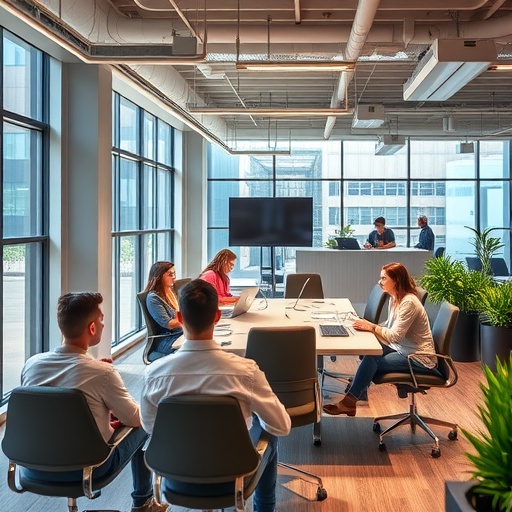
In recent years, the architectural trend towards open-plan offices has gained significant traction across industries worldwide. These designs, characterized by large, shared spaces intended to promote collaboration and spatial efficiency, have been embraced as modern solutions to organizational challenges. However, groundbreaking research conducted by Michael Rosander, a professor at the Division of Psychology at Linköping University in Sweden, highlights a darker facet of this office arrangement. His comprehensive study reveals that employees in traditional open-plan offices face a markedly increased risk of workplace bullying compared to their counterparts who have private or semi-private offices. This finding raises urgent questions about how office design may unintentionally erode the psychological safety and overall well-being of workers.
The rationale behind open-plan offices is well known: to maximize real estate usage, stimulate spontaneous interpersonal interactions, and thereby boost creativity and innovation. Despite these intentions, empirical evidence accumulated over the years challenges the notion that open-plan environments enhance productivity or employee satisfaction. Until now, however, the direct association between open-plan layouts and workplace bullying had remained unexplored, making Rosander’s recent study a critical addition to occupational health literature.
Rosander’s research leveraged a robust data set collected from over 3,300 employed individuals across Sweden, representing a diverse range of professions and industries. Participants responded to surveys designed to capture their work environment characteristics, experiences of workplace bullying, and intentions regarding job turnover. Of this cohort, 21% reported working exclusively in traditional open-plan offices devoid of private spaces, while 9% operated within activity-based offices. These latter environments combine open workspace with designated quiet zones, ostensibly to mitigate some challenges posed by fully open layouts. The remainder of respondents had access either to private offices or shared offices with a minimal number of colleagues, serving as a control group for comparative analysis.
One of the standout results from the study was the significant correlation between working in traditional open-plan offices and higher reports of workplace bullying. This relationship persisted even after controlling for confounding variables including individual personality traits and the extent of remote work participation. Such consistency suggests that it is the physical office environment itself that elevates the bullying risk rather than underlying personal or job-related factors. This insight demands a reconsideration of how workspace design can inadvertently foster hostile social dynamics.
The mechanisms that underpin this phenomenon can be traced back to the inherent characteristics of open-plan offices. The absence of physical barriers creates a setting where employees are constantly exposed to peers’ behaviors and performance deficiencies. Minor irritations, which might be overlooked or handled discreetly in private offices, become sources of escalating annoyance and confrontation in open spaces. Moreover, there is typically a lack of formalized protocols or designated areas for conflict resolution, allowing interpersonal tensions to spiral into bullying behaviors unchecked.
Rosander and his colleagues propose that the dearth of private retreat spaces in traditional open-plan environments exacerbates the victim’s distress and vulnerability. Without the ability to escape or seek solace away from aggressors, targeted individuals may feel trapped and disempowered, heightening the psychological toll of bullying. This dynamic underlines the importance of spatial autonomy as a protective factor in the workplace, a facet often neglected in open-plan office planning.
Conversely, the study found that activity-based offices, which juxtapose open work areas with rooms dedicated to concentration and privacy, did not exhibit a comparable increase in bullying incidence. This suggests that balancing openness with private zones could be a viable mitigation strategy. Nevertheless, these hybrid models were not free from challenges; employees in activity-based settings reported higher levels of distraction and a greater propensity to contemplate changing jobs. The increased likelihood of turnover intention highlights a trade-off between flexible spatial arrangements and employee satisfaction that warrants further exploration.
The implications of these findings extend deeply into organizational policy and workforce management. Employers who have already adopted or are considering open-plan offices must proactively address the heightened risk of interpersonal conflicts. Practical recommendations include instituting clear behavioral guidelines, developing robust support mechanisms for conflict resolution, and fostering an office culture that prioritizes respect and psychological safety. Additionally, strategically locating employees with similar tasks or work styles in proximity may reduce unnecessary disruption and friction.
This research significantly challenges the prevailing narrative that open-plan offices are universally beneficial. Beyond the measurable decline in job satisfaction and productivity previously documented, Rosander’s study introduces workplace bullying as a critical and costly side effect of these office designs. Social interaction, frequently touted as the principal advantage of shared spaces, also suffers when bullying undermines trust and collegiality. Ultimately, the mental well-being of employees and organizational health appear intricately linked to thoughtful, human-centered office design.
By illuminating the causal pathways between spatial configuration and harmful social behaviors, this study offers a technological and psychological framework for reimagining workplace environments. Architectures that embrace flexibility must simultaneously ensure that they do not sacrifice the dignity, safety, and satisfaction of those who inhabit them. As businesses worldwide grapple with hybrid work models and evolving employee expectations, integrating the lessons from Rosander’s research will be paramount to fostering sustainable, resilient, and humane workplaces.
This research was conducted in collaboration with Morten Birkeland Nielsen from the University of Bergen and was funded by Forte, the Swedish Research Council for Health, Working Life and Welfare. These affiliations lend additional credibility and emphasize the rigorous academic foundation supporting the findings. As awareness of open-plan office risks grows, it is hoped that future workplace innovations will balance openness with protection to create environments where productivity and well-being coexist harmoniously.
Cite Scienmag News
Courtney Benton. (March 9, 2026). Study Finds Higher Bullying Rates in Open-Plan Office Environments. Scienmag. https://scienmag.com/study-finds-higher-bullying-rates-in-open-plan-office-environments/
Courtney Benton. "Study Finds Higher Bullying Rates in Open-Plan Office Environments." Scienmag, 9 March 2026, https://scienmag.com/study-finds-higher-bullying-rates-in-open-plan-office-environments/. Accessed 4 September 2026.
Courtney Benton. "Study Finds Higher Bullying Rates in Open-Plan Office Environments." Scienmag. March 9, 2026. https://scienmag.com/study-finds-higher-bullying-rates-in-open-plan-office-environments/


